
The Berlin Love Parade stands as one of the most iconic moments in modern music history—a grassroots gathering that transformed electronic dance music from an underground subculture into a worldwide phenomenon. What began in 1989 as a small political demonstration for peace, unity, and creative freedom quickly evolved into a massive celebration of techno, house, and rave culture that defined an entire generation.
Founded by DJ Dr. Motte shortly after the fall of the Berlin Wall, the Love Parade symbolized a new era for the city. Berlin, once divided by ideology and concrete, became a canvas for freedom and expression. Thousands of dancers took to the streets, united by pounding basslines and the belief that music could dissolve social and political barriers. By the mid-1990s, the parade had grown exponentially, drawing hundreds of thousands—and eventually millions—of attendees from across the globe.
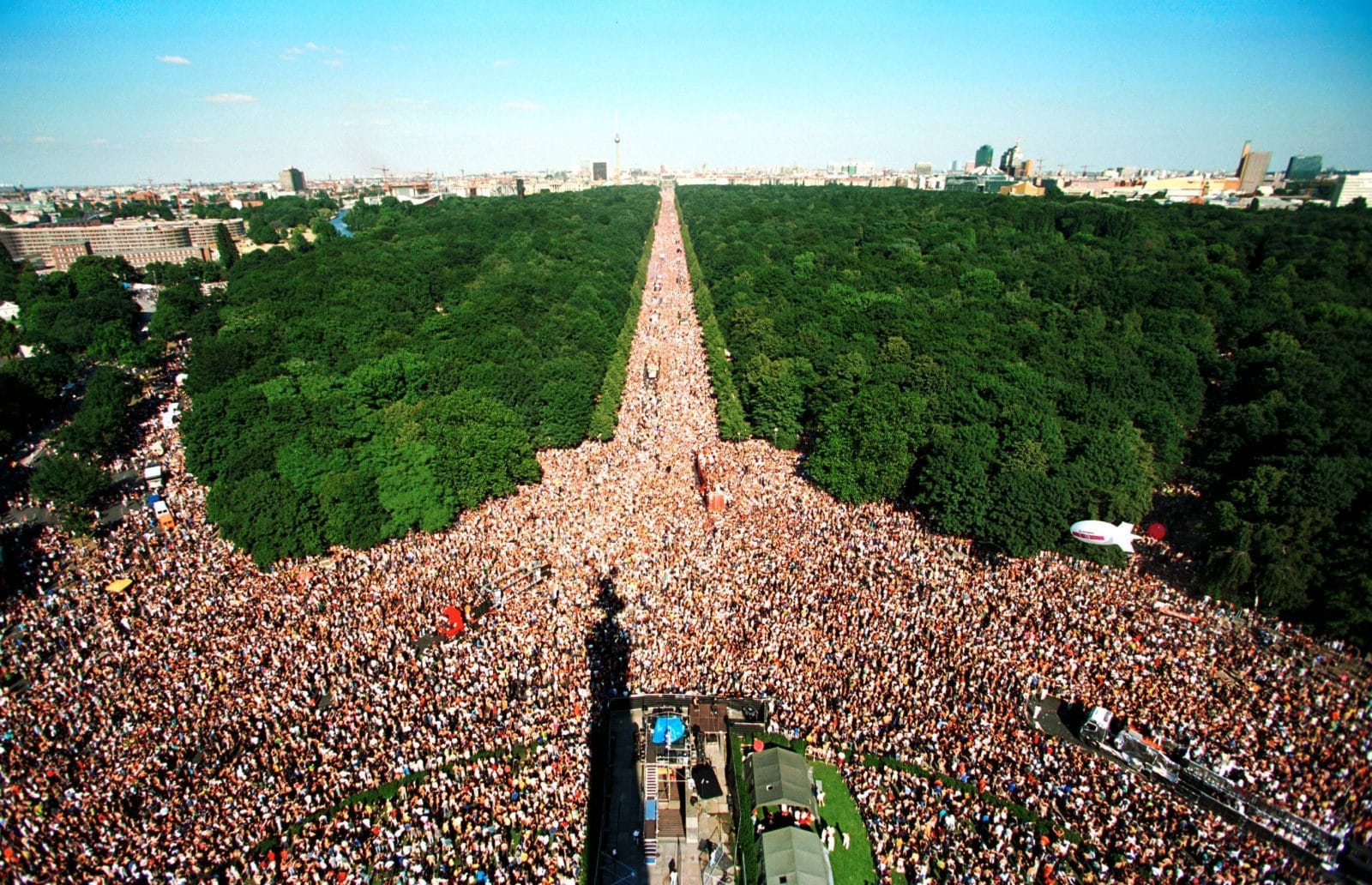
At its peak, the Love Parade transformed central Berlin into an open-air dancefloor. Colorful floats carrying world-class DJs rolled through the city, blasting techno anthems that echoed between historic landmarks. The event was more than a party; it was a declaration. Electronic music was no longer confined to warehouses and clubs—it belonged to the streets, the people, and the future.
The cultural impact of the Love Parade cannot be overstated. It helped cement Berlin’s reputation as the global capital of techno and inspired countless festivals, parades, and electronic music movements worldwide. Artists, promoters, and fans alike point to the Love Parade as a defining force that legitimized electronic music as an art form and a unifying cultural language.

Though the parade officially ended after a tragic incident in 2010, its spirit lives on. The ideals of peace, love, unity, and respect—often summarized as PLUR—continue to shape electronic music culture today. From Berlin’s club scene to massive festivals around the world, the legacy of the Love Parade endures as a reminder of what can happen when music, freedom, and community collide.