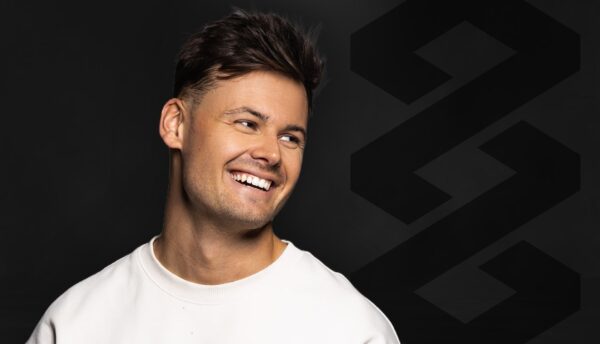

There are certain names in electronic music that become inseparable from a particular face, a particular sound and even a particular period in a fan’s life. For an entire generation of trance listeners, Dash Berlin is one of them. The soaring vocals, enormous melodic breakdowns and emotionally charged records such as “Till the Sky Falls Down,” “Waiting,” “Man on the Run” and “Better Half of Me” helped define an era when trance was expanding beyond its traditional audience and onto some of the biggest festival stages in the world. Standing at the front of it all was Jeffrey Sutorius, the Dutch DJ whose unmistakable presence behind the decks became the public identity of Dash Berlin. His road from record-store employee to international headliner was already remarkable. What followed — losing the name with which he had become synonymous, rebuilding a career as Jeffrey Sutorius and eventually returning as Dash Berlin — turned it into something considerably more complicated.
Long before Dash Berlin existed, Sutorius was already immersed in dance music. He began DJing during the 1990s and experienced firsthand the enormous European dance culture developing around him. Berlin’s legendary Love Parade made a particularly lasting impression. Sutorius attended the event and performed there under earlier aliases around the turn of the millennium, years before Dash Berlin would become a reality. The eventual name was partly inspired by that connection to Berlin and the culture surrounding the Love Parade. Sutorius has recalled that when the team searched “Dash Berlin” online at the time, there was virtually nothing attached to it. It was, appropriately, a blank canvas on which they could build something new.
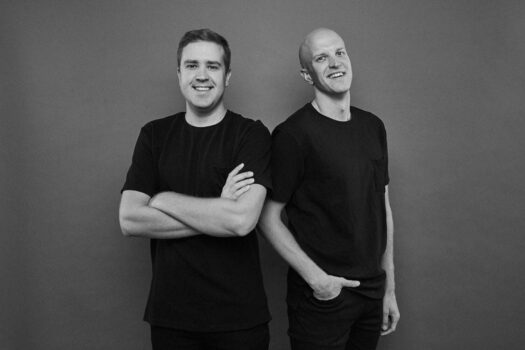
That something arrived in 2007 with “Till the Sky Falls Down.” Dash Berlin was originally a collaborative project involving Sutorius alongside producers Eelke Kalberg and Sebastiaan Molijn, with Sutorius becoming its touring DJ, frontman and increasingly recognizable public face. The debut single quickly established that the project had found something special. Armin van Buuren championed “Till the Sky Falls Down,” including it on his Universal Religion compilation, and Dash Berlin subsequently signed with Armada Music. What followed was a run of records that leaned heavily into the emotional possibilities of trance: big melodies, memorable vocals and songs designed not simply to make a dancefloor move, but to make it feel something.
The 2009 album The New Daylight cemented that identity. “Waiting,” featuring Emma Hewitt, became one of the defining vocal trance records of the period, while “Man on the Run,” “Never Cry Again” and the title track helped establish a sound that could work equally well through headphones and in front of tens of thousands of festivalgoers. Dash Berlin followed with #musicislife in 2012 and later the two-part We Are project, continuing to push the sound toward the increasingly blurred line between trance, progressive house and the larger EDM movement. Records such as “Better Half of Me,” “Disarm Yourself,” “Steal You Away” and “Shelter” became staples for fans, with Sutorius serving as the person who delivered those songs to audiences around the world.
His connection with those audiences became one of the defining characteristics of Dash Berlin. While Kalberg and Molijn largely remained behind the scenes, Sutorius spent years traveling relentlessly, building an unusually personal relationship with the project’s fans — many of whom adopted the nickname “Dashers.” As electronic dance music exploded globally during the early 2010s, Dash Berlin was positioned directly in the middle of it. Sutorius appeared on the main stages of festivals including Ultra and EDC, became a fixture in Las Vegas and developed especially passionate audiences across Asia, Latin America and other international markets. Dash Berlin entered DJ Mag’s Top 100 DJs poll at No. 15 in 2010 as that year’s highest new entry, climbed to No. 8 in 2011 and reached No. 7 in 2012. For audiences seeing those festival performances, there was little ambiguity about who Dash Berlin was: the name on the screen and the man standing behind the decks had effectively become one and the same.

But the structure behind Dash Berlin was more complicated than the image audiences saw onstage. The project had always been collaborative, and by 2018 the relationship between Sutorius, Kalberg, Molijn and the project’s management had deteriorated dramatically. Sutorius announced his separation from his longtime collaborators and management amid disagreements that eventually developed into a lengthy dispute surrounding control of the Dash Berlin name. At the same time, he spoke publicly about the physical and personal effects of years spent maintaining an intense international touring schedule. For an artist who had spent roughly a decade building an identity in public, the dispute created an unusual situation: Jeffrey Sutorius was suddenly separated from the name by which millions of dance music fans knew him.
There appeared to be a resolution in 2019 when the parties announced that their differences had been settled and that Sutorius would continue the Dash Berlin legacy while Kalberg and Molijn stepped away. It did not last. Another legal decision in 2021 meant Sutorius could no longer perform under the Dash Berlin name, and he once again moved forward simply as Jeffrey Sutorius. The Dash Berlin project continued separately for a period, but for Sutorius, the following years became less about recreating his previous career and more about establishing what existed beyond it. He released music under his own name, launched his BODYWRMR label and explored a broader palette incorporating progressive house, EDM and trance. The records and performances may have carried a different name, but the connection with the audience that had followed him through the Dash Berlin years remained.
That chapter makes what happened in 2026 particularly significant. After years away from the identity that had defined so much of his career, Sutorius regained the ability to move forward as Dash Berlin. His official festival comeback arrived in July on the Mainstage at Ultra Europe in Split, Croatia — an appropriately enormous setting for a return that had been years in the making. “The loss of the brand name for 5+ years definitely has left scars and there are still unresolved issues that need to be clarified,” Sutorius told EDM.com ahead of the performance, while emphasizing that his focus was now on approaching the future positively. Shortly afterward came “Lonely Man,” his first completely new Dash Berlin single in five years and an indication that the comeback was intended to be more than a nostalgic return to old records.
That distinction may ultimately define this next era. Sutorius could easily build an entire touring career around the enormous catalog associated with Dash Berlin. “Waiting” can still transport longtime trance fans back to another moment in their lives within seconds. “Till the Sky Falls Down” remains instantly recognizable nearly two decades after its release. Those records carry memories of an era when vocal trance, progressive sounds and the rapidly growing EDM festival world were colliding in new ways. But Sutorius has spent the years since the split making music, touring and developing an identity outside the Dash Berlin name. Returning to it now gives him something he did not have the first time around: the perspective of having lived without it.
Perhaps that is what makes the Dash Berlin story so unusual. Most artist comebacks follow an absence from music. Jeffrey Sutorius never really disappeared. He continued performing, producing and standing in front of crowds; what disappeared was the name attached to him. For years, fans could still see the artist they associated with Dash Berlin, just without those two familiar words above the stage. In 2026, the name and the face have come back together.
For longtime Dashers, that undoubtedly carries a powerful sense of nostalgia. But nostalgia alone would undersell what the return represents. Nearly two decades have passed since “Till the Sky Falls Down” introduced Dash Berlin to the wider trance community. Dance music has changed enormously since then, and so has Jeffrey Sutorius. He has experienced the extraordinary rise of the project, the exhausting reality of maintaining it, the pain of losing it and the challenge of discovering who he was without it. Now he gets the rare opportunity to begin again with the same name, but from a very different starting point.
Dash Berlin once began as a blank canvas. Almost twenty years later, Jeffrey Sutorius has one again — only this time, it comes with an entire history behind it.