
What a 28-day Spotify for Artists snapshot reveals about listener playlists, algorithmic discovery, and the results worth measuring.
Is Spotify Playlist Promotion worth it in 2027? It can be. Active, well-matched playlists still introduce music to listeners, and a new academic study finds a measurable average increase in streaming demand from curated playlist placements. But follower counts and promises of huge reach are not enough. Artists should look at actual streams, listener behavior, and what happens after the initial exposure.
Here is a closer look at a real 28-day snapshot, followed by what the research says and how to evaluate a campaign without confusing correlation with causation.
1. Spotify Playlist Promotion Results: What the Last 28 Days Show
The screenshots below are taken directly from the Spotify for Artists dashboard of an established Afro House DJ. They provide insights into the streaming performance of multiple tracks across the artist’s catalog, rather than focusing on a single release or an individual promotional campaign. Both screenshots reflect Spotify’s Last 28 Days reporting period.
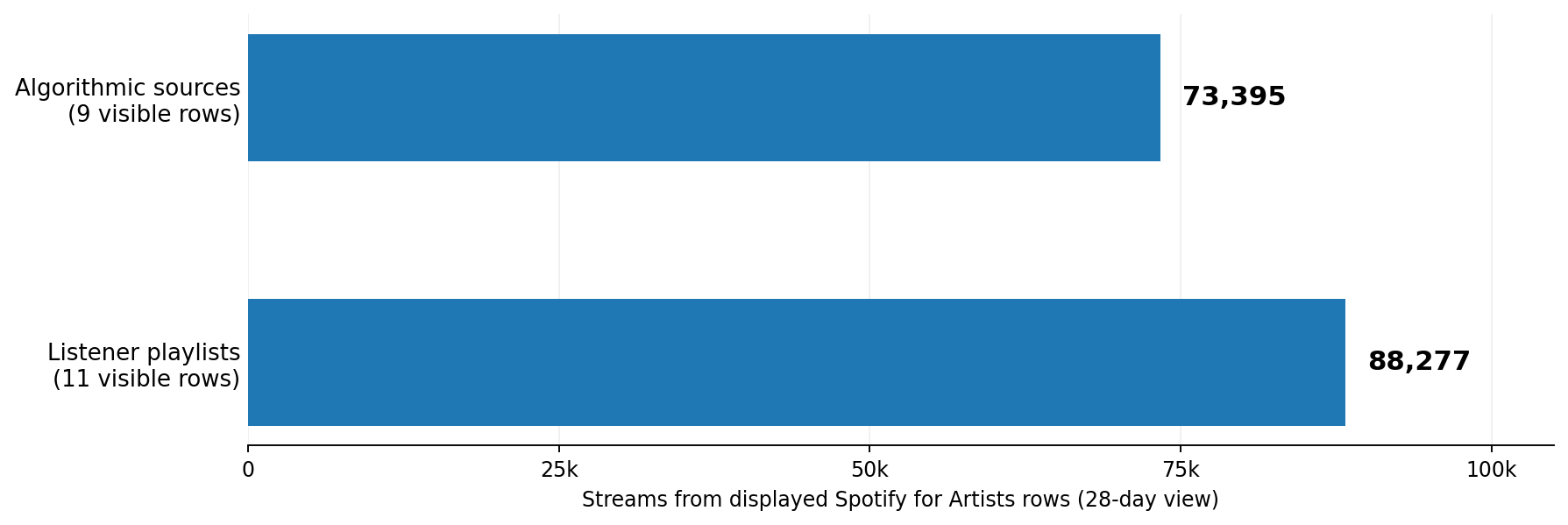
Figure 1. Sums of the rows visible in the two supplied 28-day screenshots. These are different source categories, not a comparison of campaign efficiency or proof that one caused the other.
88,277 streams from the 11 listener playlists shown
The listener-playlist view displays 88,277 streams across its 11 visible rows. Some individual playlist results stand out:
Listener playlist shown | Streams in 28 days |
Afro House 2026 — Top 100 | 13,355 |
Mi Chico — Jason Derulo & DJ Goja | 11,518 |
Arabic Deep House 2026 | 10,924 |
Afro House 2026 — Summer Mix | 10,313 |
Afro House with Power / Rex Stax | 8,837 |
The remaining six visible playlist rows account for another 33,330 streams. The list includes a mix of externally curated playlists and an artist-named playlist; it should not be presented as the results of a single paid campaign.
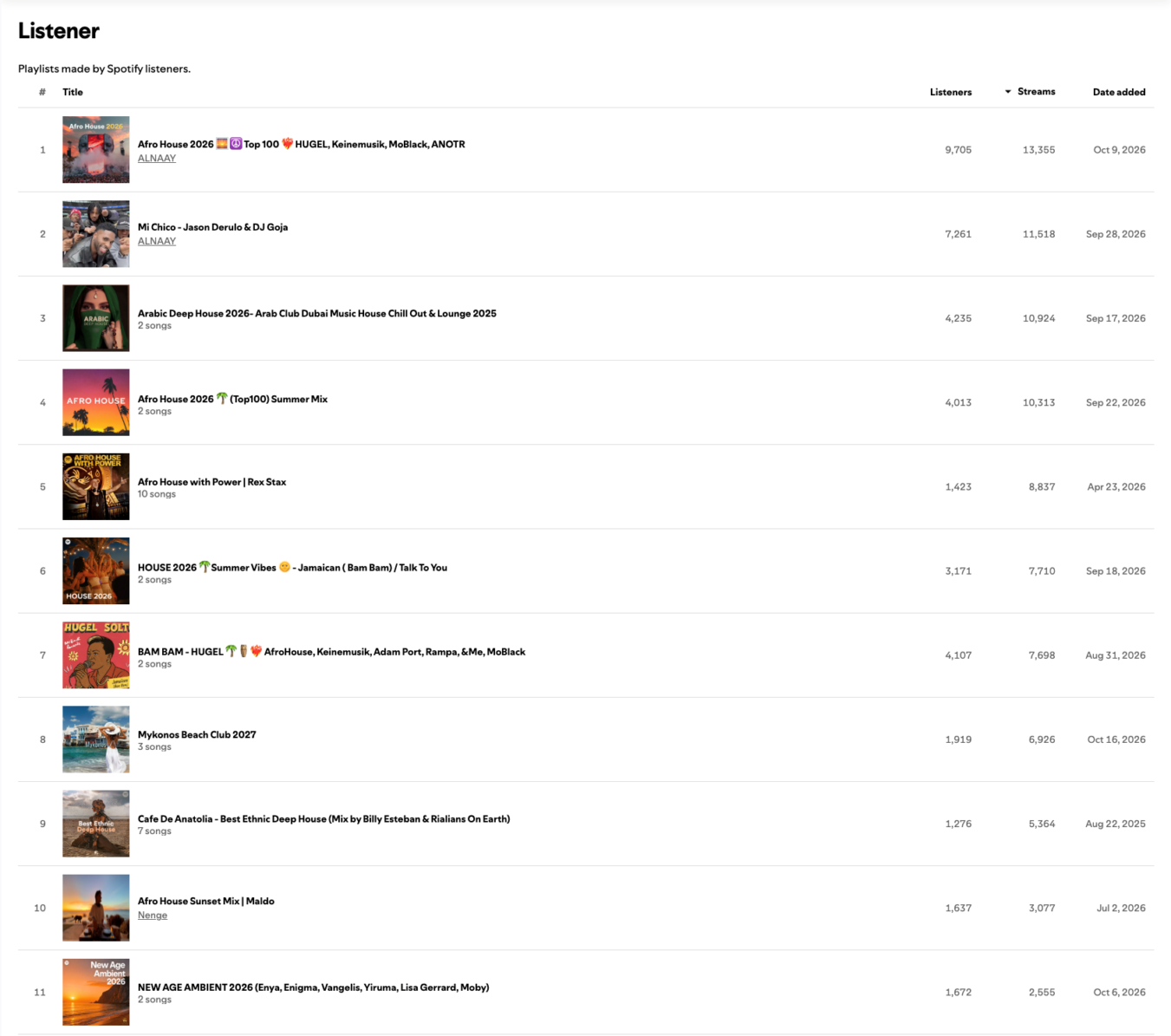
Figure 2. Listener playlists in Spotify for Artists, 28-day view, captured November 16, 2026. The 88,277 figure is the sum of the 11 rows shown, not necessarily all listener-playlist streams for the catalog.
73,395 streams across the nine algorithmic sources shown
The algorithmic-playlist screenshot is just as interesting. Its nine visible rows add up to 73,395 streams in the same 28-day reporting view:
Listener playlist shown | Streams in 28 days |
Afro House 2026 — Top 100 | 13,355 |
Mi Chico — Jason Derulo & DJ Goja | 11,518 |
Arabic Deep House 2026 | 10,924 |
Afro House 2026 — Summer Mix | 10,313 |
Afro House with Power / Rex Stax | 8,837 |
The remaining six visible playlist rows account for another 33,330 streams. The list includes a mix of externally curated playlists and an artist-named playlist; it should not be presented as the results of a single paid campaign.
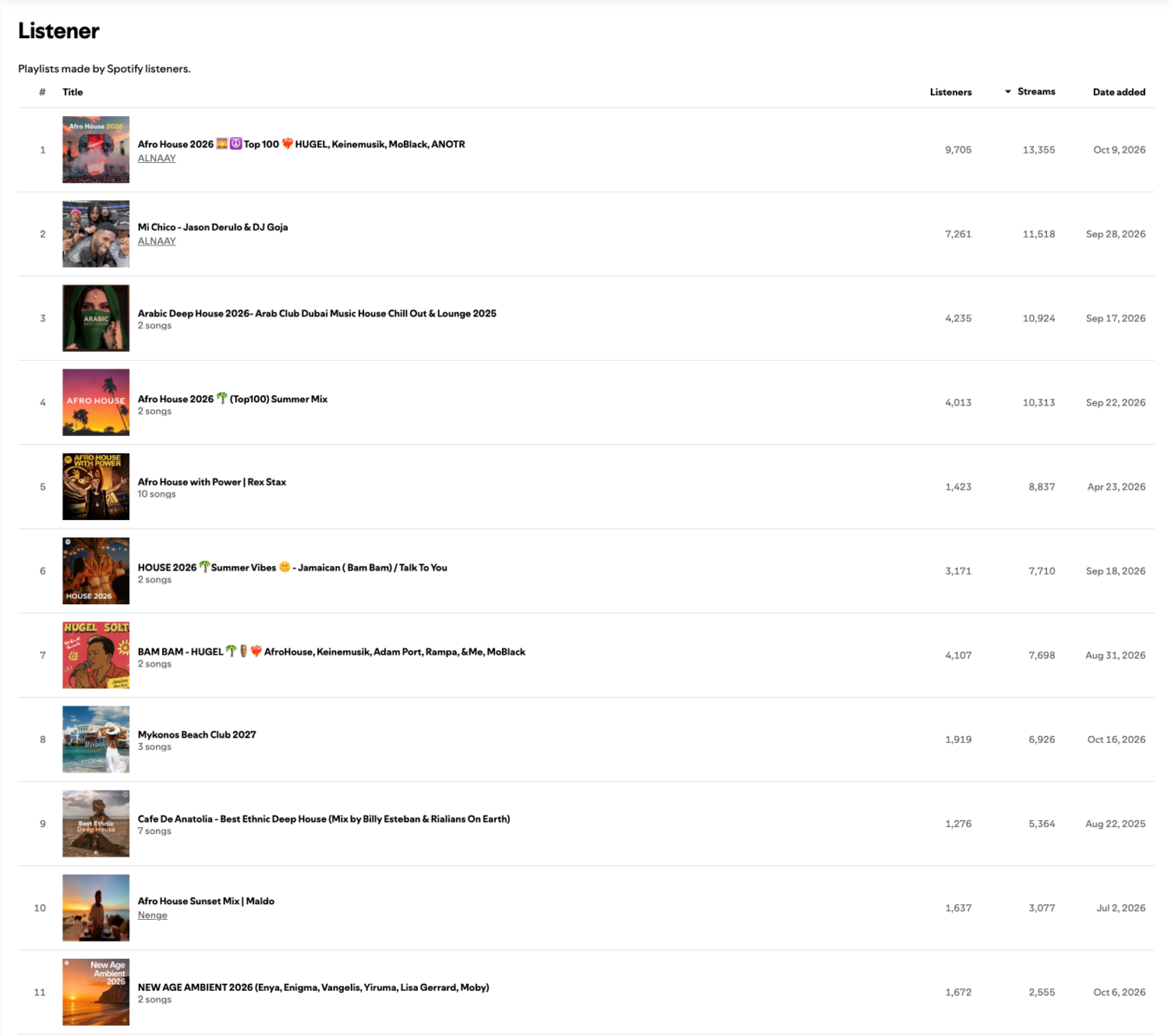
Figure 2. Listener playlists in Spotify for Artists, 28-day view, captured November 16, 2026. The 88,277 figure is the sum of the 11 rows shown, not necessarily all listener-playlist streams for the catalog.
The important point is not that every playlist produced thousands of plays. It is that playlist activity can be measured. A large follower number by itself cannot tell an artist how many listeners actually reached a track.
73,395 streams across the nine algorithmic sources shown
The algorithmic-playlist screenshot is just as interesting. Its nine visible rows add up to 73,395 streams in the same 28-day reporting view:
Algorithmic source shown | Streams in 28 days |
Radio | 49,426 |
Mixes | 10,398 |
Discover Weekly | 5,691 |
Your DJ | 3,035 |
Release Radar | 2,688 |
Smart Shuffle, On Repeat, Daylist and Blend (combined) | 2,157 |
Total across nine visible rows | 73,395 |
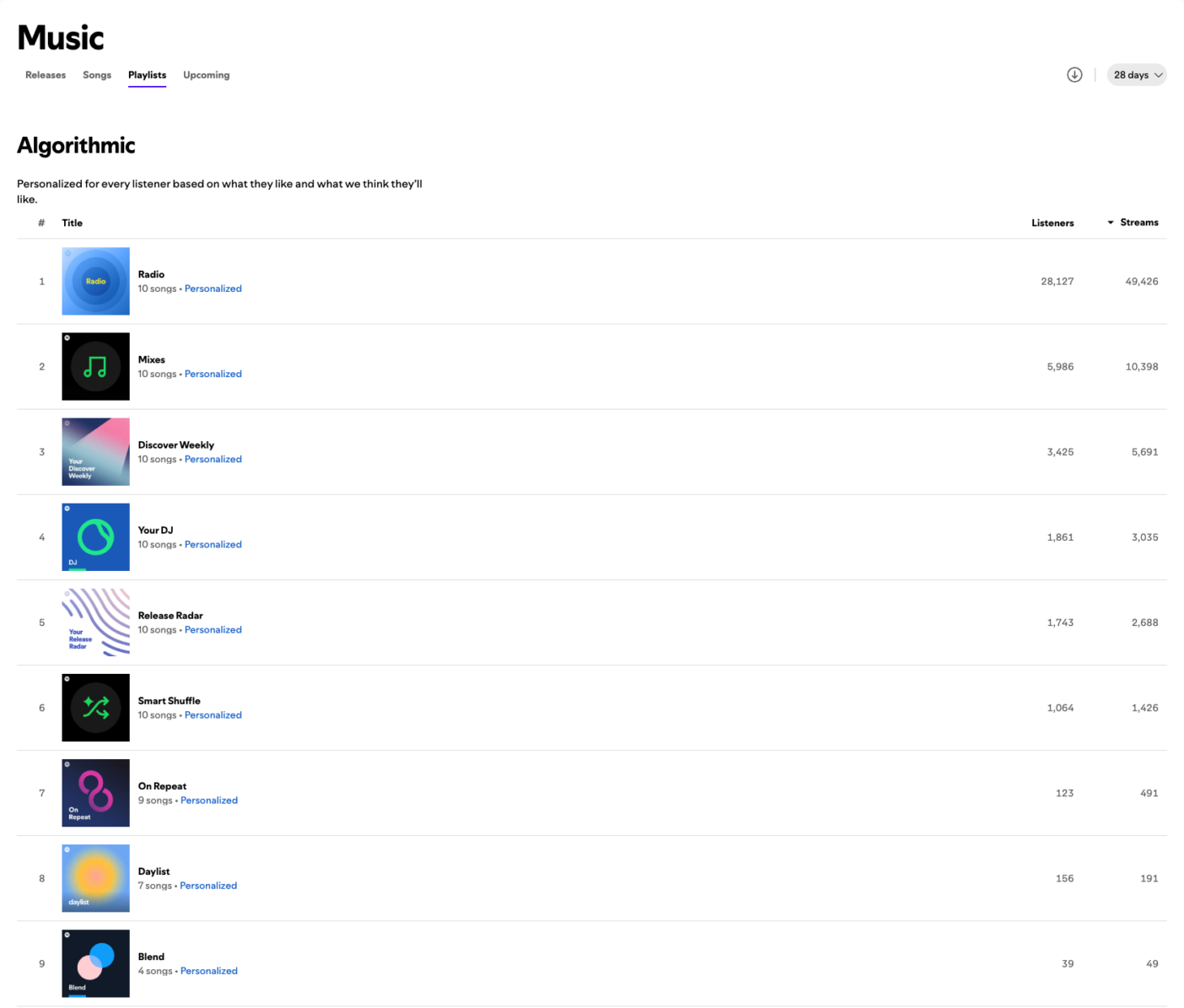
Figure 3. Algorithmic sources in Spotify for Artists, 28-day view, captured November 16, 2026. The screenshot aggregates streams from multiple catalog tracks.
Spotify Radio alone contributed 49,426 displayed streams. This illustrates why artists should check more than curator playlists when reviewing their performance. Discover Weekly, Radio and personalized listening surfaces can be meaningful discovery channels in their own right.
There is an important distinction, though: the screenshots do not prove that those 73,395 algorithmic streams were caused by playlist promotion. Other factors — existing followers, saves, repeat listening, direct traffic, releases and outside marketing — can all contribute to discovery. To establish incremental impact, you would need track-level timelines, promotion dates, campaign costs and an appropriate baseline or comparison.
Spotify also notes that listener counts from different source rows cannot simply be added together, because the same listener may hear music through more than one source. The figures above sum streams in the displayed rows, not unique people.
2. What a Large Independent Study Says About Playlist Effectiveness
A peer-reviewed study published online in the Journal of Marketing in November 2025, and highlighted by UNSW Business School in April 2026, provides a useful second perspective. Researchers Nils Wlömert, Dominik Papies and Harald J. van Heerde examined 200,455 playlist listing-and-removal events using data spanning 23,721 Spotify playlists.
They reported three findings worth knowing:
8.5% more global streams on average while tracks were listed on the studied playlists, relative to matched comparisons.
A 4% carryover effect after removal, meaning the average effect did not disappear immediately when a listing ended.
A 21.6% streaming increase for playlists in the top fifth by follower count, compared with no measurable uplift for the bottom fifth in that particular analysis.
These are study averages, not promised outcomes for an artist or a commercial promotion package. The paper also found that playlist position, previous exposure and the fit between tracks and playlists affect results.
The broader lesson is encouraging but nuanced: playlists can create real streaming demand, yet the value of a placement varies enormously. A playlist with the right audience and active listening can be worth more than a superficially impressive follower total.
3. Why Spotify Playlist Promotion Is About More Than the Initial Streams
It helps to think of Spotify Playlist Promotion as an opportunity for discovery, not a guaranteed algorithm trigger. A person might hear a song on a playlist, save it, revisit it, follow the artist or share it. Those actions can contribute to a longer relationship with the music. But not every first listen becomes a fan, and no outside promoter can promise a Discover Weekly placement.
When reviewing Spotify Promotion results, I would look at five things together:
- Real listening activity: How many streams and listeners did each relevant playlist actually produce?
- Engagement: Did saves, repeat plays, playlist adds and followers change during the period?
- Source mix: Are streams coming only from third-party playlists, or are there also meaningful personalized and direct sources?
- Staying power: Does listening continue after a playlist placement ends?
- Cost and context: What was spent on outreach or advertising, and what other promotions ran at the same time?
That last point matters. A low cost per stream can sound persuasive, but it is a weak metric if those streams do not turn into listeners who care about the artist. Equally, an artist should not divide an advertising budget by all Spotify streams recorded that month and assume every stream was purchased by that campaign.
4. Spotify Playlist Pitching in 2027: What Still Makes Sense?
Spotify Playlist Pitching remains useful, but artists should distinguish between two different routes.
Editorial pitching is Spotify’s own process for unreleased music. Artists can submit an eligible upcoming song through Spotify for Artists. Spotify recommends delivering and pitching it at least seven days before release; submitting does not guarantee editorial inclusion.
Independent curator outreach means introducing music to relevant playlists run by listeners, DJs or other curators. Here, genre fit, genuine activity and curator independence matter more than sending a track to as many lists as possible.
5. Spotify Promotion: Playlists or Social Ads?
There is no universal winner. Playlist outreach can place music in an existing listening context, while social advertising can help artists introduce a release to a selected audience and test different creative ideas. Organic short-form content, collaborations and DJ support can work alongside both.
To compare them fairly, measure each channel against the same goal — for example engaged listeners, saves, repeat listening or new followers — and use campaign-specific costs and dates. The screenshots in this article do not include an advertising budget or a no-promotion baseline, so they cannot establish that playlisting has a lower cost per fan than Meta Ads.
For artists exploring Spotify Promotion, the most useful question is not simply “How many streams can I get?” It is “Will this approach help the right people discover my music — and will any of them come back?”
6. Where Artists Can Find Playlist Outreach Support
For musicians who would rather get help identifying and approaching suitable playlists, Playlist-Promotion.com offers Spotify playlist outreach and music promotion services. You can read about its Spotify Playlist Promotion approach or explore the Spotify promotion packages..
7. Quick Answers: Is Spotify Playlist Promotion Worth It?
Is Spotify Playlist Promotion worth it for independent artists?
It can be when the track fits active playlists and the results are assessed through actual listening and engagement. The value depends on the audience, campaign cost, musical fit and goals; playlist follower counts alone do not determine success.
Can playlists help a song reach Spotify Radio or Discover Weekly?
Playlist discovery may introduce music to listeners who subsequently save or replay it, but algorithmic recommendations have multiple inputs. The screenshots above show both types of listening, not proof of a direct causal link.
Does Spotify Playlist Pitching still work after release?
Spotify’s official editorial pitch must be submitted before release. Independent curators can discover and consider already released songs, subject to their own editorial choices.
How should I judge Spotify Playlist Promotion Results?
Compare relevant playlist streams, active listeners, saves, repeat listening, downstream sources and the campaign’s actual cost. Check performance over time instead of judging success by follower reach alone.
8. The Bottom Line
The case for playlists in 2027 is neither “playlisting is dead” nor “every placement will boost the algorithm.” Real Spotify for Artists screenshots show that listener playlists and personalized recommendations can both deliver substantial listening across an artist’s catalog. Independent research likewise finds an average benefit from curated playlist inclusion, with important differences between placements.
The practical takeaway: treat Spotify Playlist Promotion as one part of a broader discovery strategy, track the results honestly, and focus on whether listeners stay interested after the first play.