Founded in 1991, Ministry of Sound began as a bold experiment in South London that would go on to redefine club culture worldwide. Inspired by the legendary house clubs of New York and Chicago—most notably the Paradise Garage—the venue was created by entrepreneur James Palumbo with a simple but radical idea: put sound quality above everything else. At a time when many clubs treated audio as an afterthought, Ministry of Sound was built around a world-class sound system designed to deliver pure, immersive club music at reference-level fidelity.
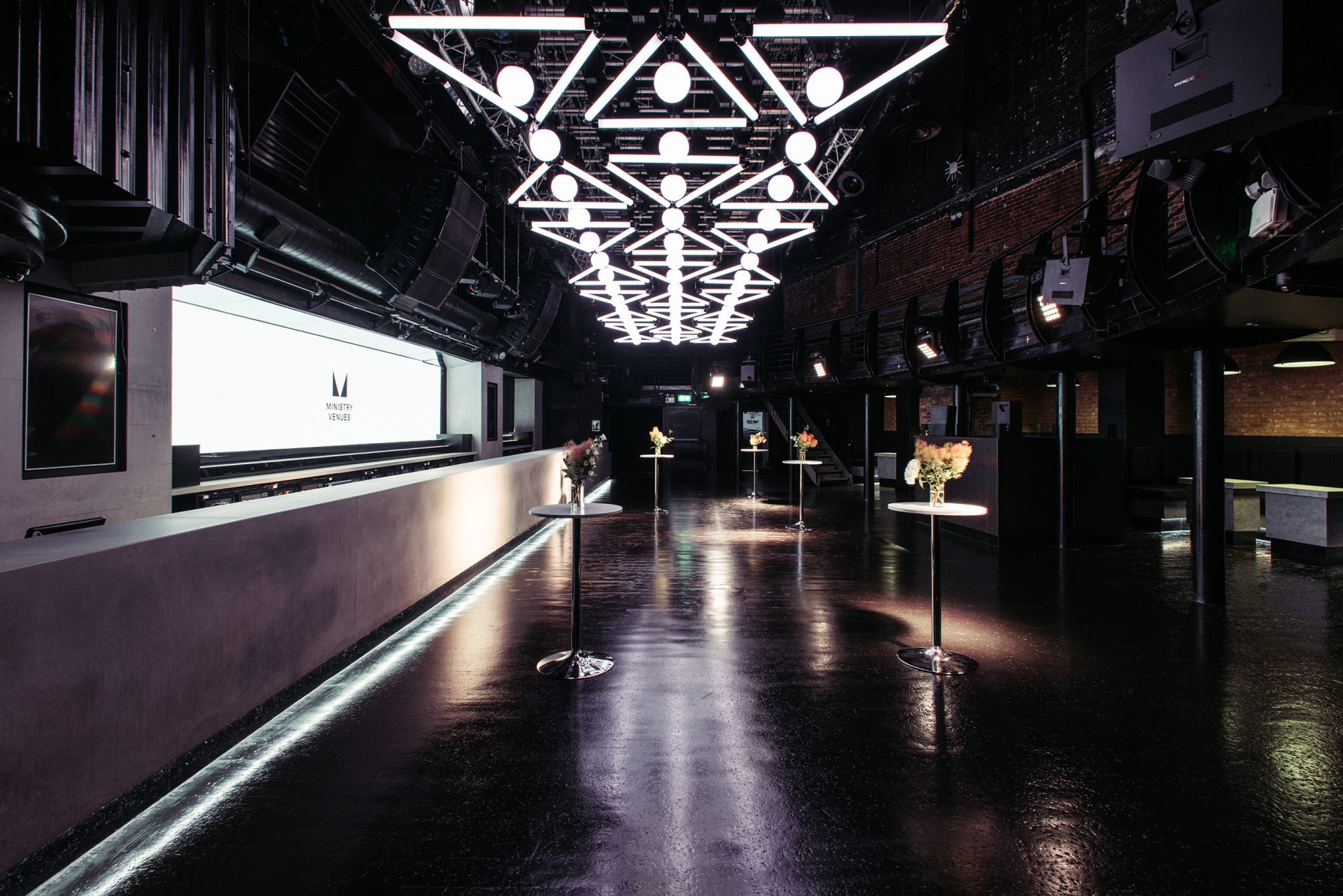
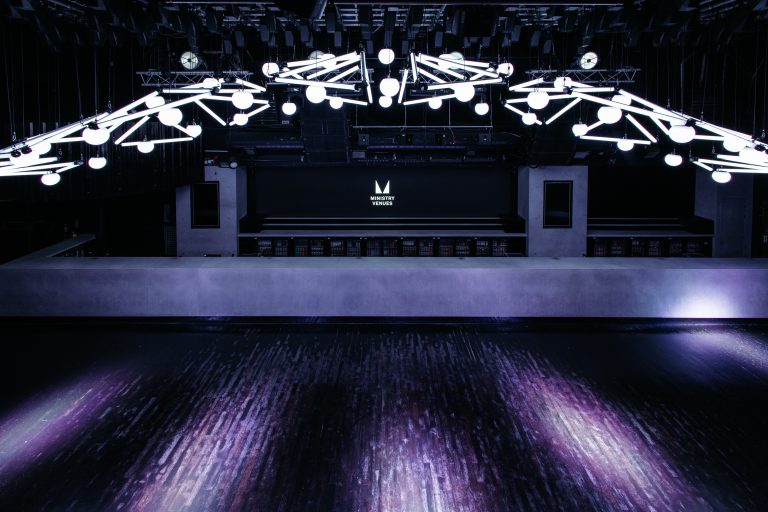
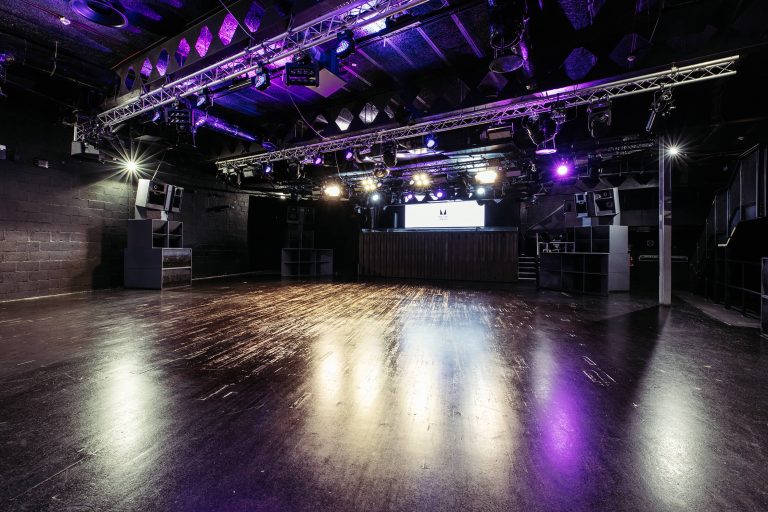
The club opened its doors in an abandoned bus garage near Elephant & Castle, an area far removed from London’s traditional nightlife districts. This unconventional location allowed Ministry of Sound to operate outside strict licensing hours and cultivate a devoted community of dancers who came for the music rather than the glamour. The heart of the venue, the iconic Box, quickly earned a reputation as one of the best-sounding rooms in the world, setting a new benchmark for club acoustics and dancefloor experience.
As the 1990s progressed, Ministry of Sound became a cornerstone of the UK’s rapidly evolving electronic music scene. House, techno, and later trance and garage found a permanent home within its walls. DJs who would later become global superstars—such as Pete Tong, David Morales, Roger Sanchez, and Paul Oakenfold—helped shape its musical identity, while the club itself became synonymous with quality, credibility, and innovation in dance music culture.
Beyond the club, Ministry of Sound expanded into a powerful multimedia brand. In 1993, it launched Ministry of Sound Recordings, capitalizing on the exploding demand for club music outside the dancefloor. Its compilation albums, particularly the Sessions and Annual series, introduced millions of listeners to DJ-curated electronic music and played a major role in bringing house music into the mainstream. Over time, the label diversified into artist releases, sub-labels, and international distribution, reinforcing its global influence.
By the 2000s, Ministry of Sound had evolved into a worldwide franchise, opening clubs in cities such as Ibiza, Singapore, Buenos Aires, and Las Vegas, while also branching into radio, fitness, and lifestyle ventures. Despite changes in ownership and the shifting tides of club culture, the brand has remained rooted in its original philosophy: championing dance music and delivering exceptional sound and experience.
More than three decades after its founding, Ministry of Sound stands as a living piece of electronic music history. It is not just a nightclub or a record label, but a symbol of how underground culture can grow into a global movement without losing its soul.