
As Amsterdam Dance Event celebrates its 30th anniversary, few people are better positioned to reflect on its evolution than Gary Smith. A longtime programmer and moderator at ADE Pro, Smith was involved with the event even before its official launch in 1996, giving him a front-row seat to three decades of growth, change and cultural impact.
What began as a relatively modest gathering for electronic music professionals has since developed into one of the world’s most influential celebrations of dance music. Yet, for Smith, ADE’s fundamental purpose has remained remarkably consistent.
From its earliest days, ADE was created to support both the music filling dance floors around the world and the people responsible for making it.
The event celebrates established artists, executives and innovators while also creating opportunities for emerging musicians, future label executives and other young professionals attempting to build lasting careers in the industry. That combination—respecting the people shaping electronic music today while helping the next generation prepare for the challenges ahead—continues to define ADE’s raison d’être.
Getting the first edition off the ground, however, required persistence.
One of the pivotal figures was John de Mol Sr., who was then leading Conamus, a Dutch nonprofit foundation established in 1962 to promote Dutch popular music at home and abroad. The organization was renamed Buma Cultuur in 2006 and is now led by Frank Helmink.
After extensive lobbying from Maria Jimenez and Peter Schmidt—the latter also known as the founder of Eurosonic Noorderslag—De Mol agreed to support the inaugural edition of ADE.
Even then, dance music was still fighting to be taken seriously. Smith recalls a meeting in Hilversum to finalize some of the event’s details when De Mol looked across the table and questioned whether dance music could really be considered music at all.
The timing makes the comment especially memorable. By 1996, electronic music was moving decisively into the mainstream and becoming an increasingly dominant force on the charts.
Brick-sized phones and accidental networking
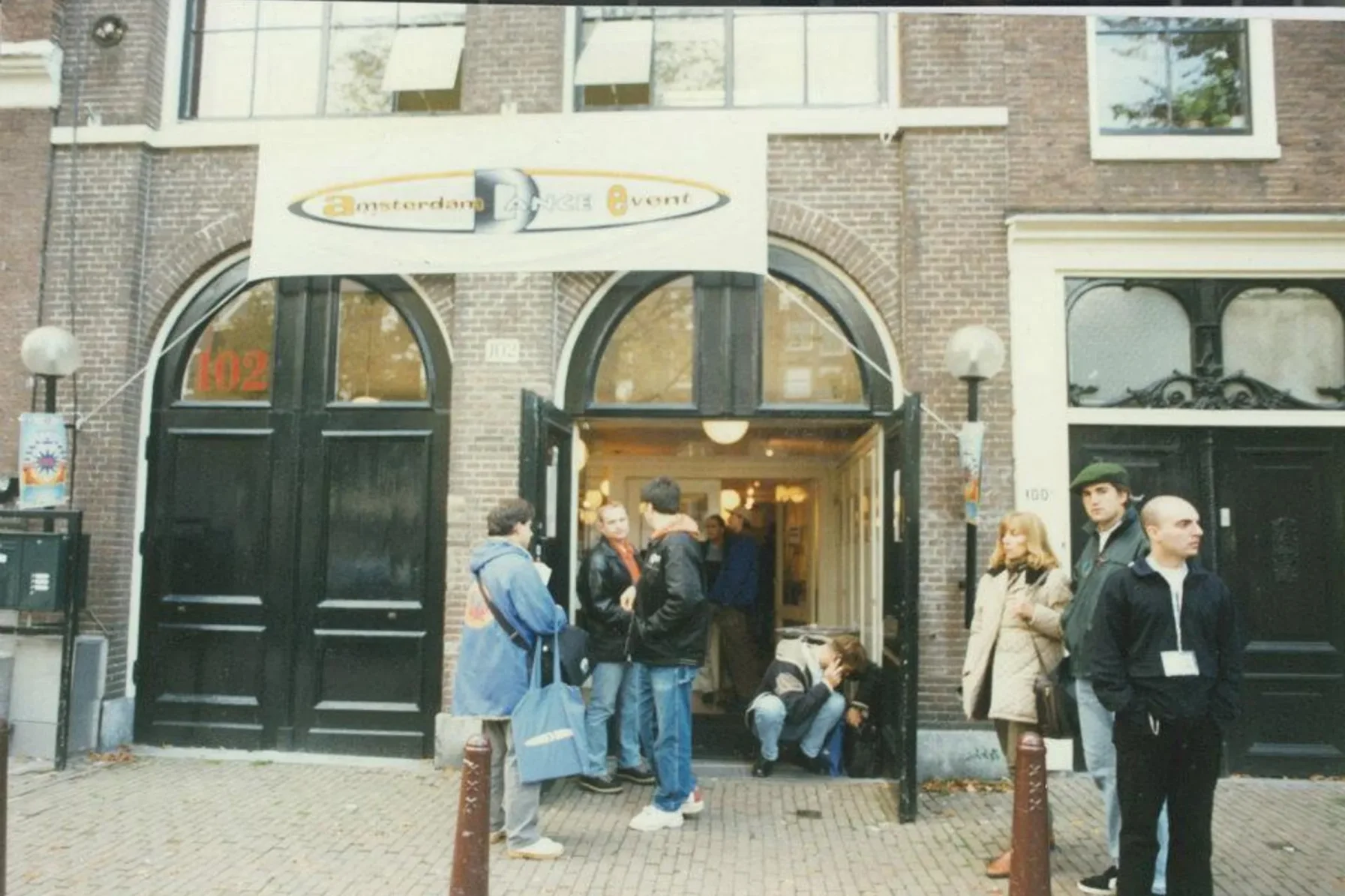
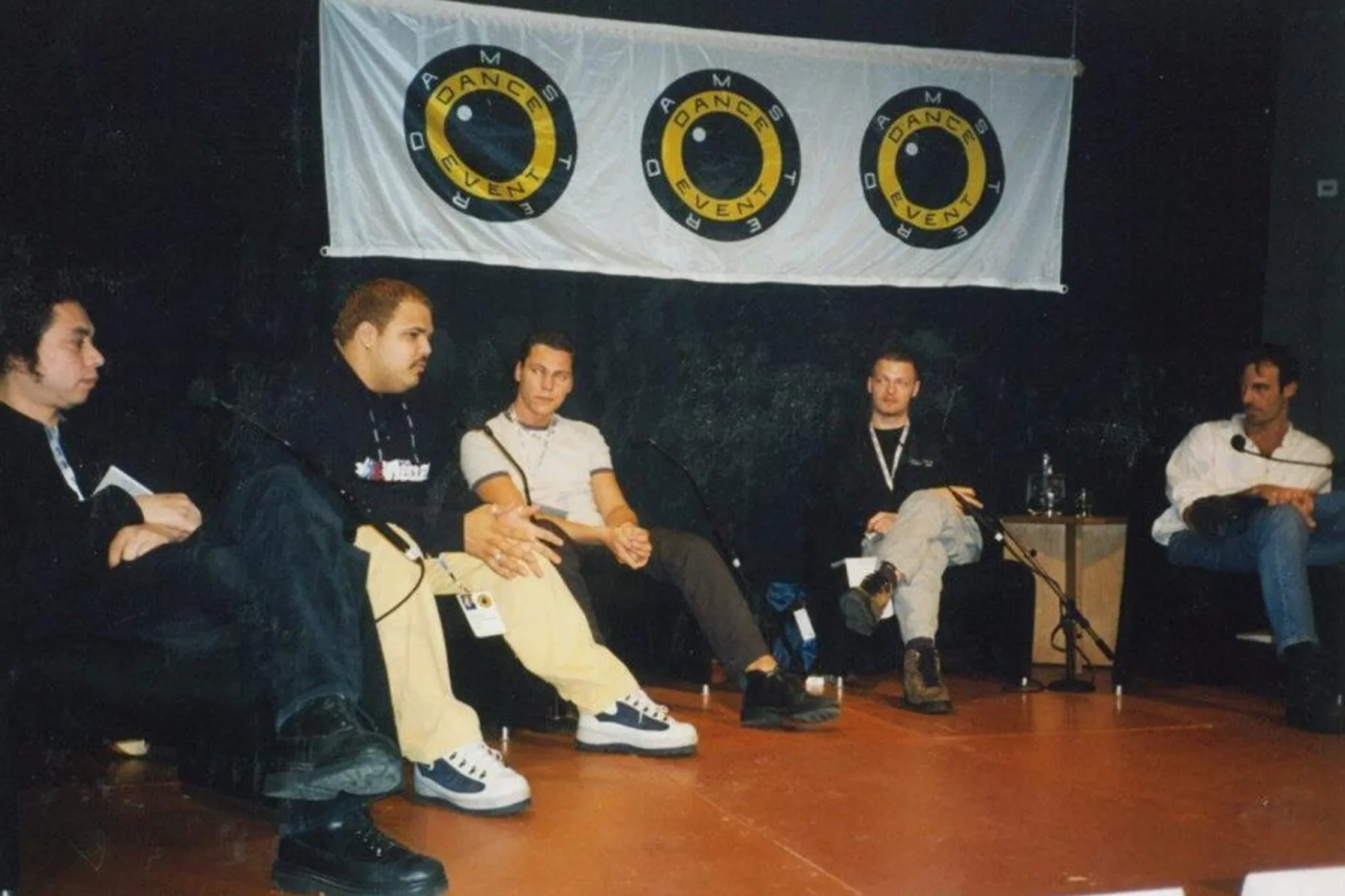
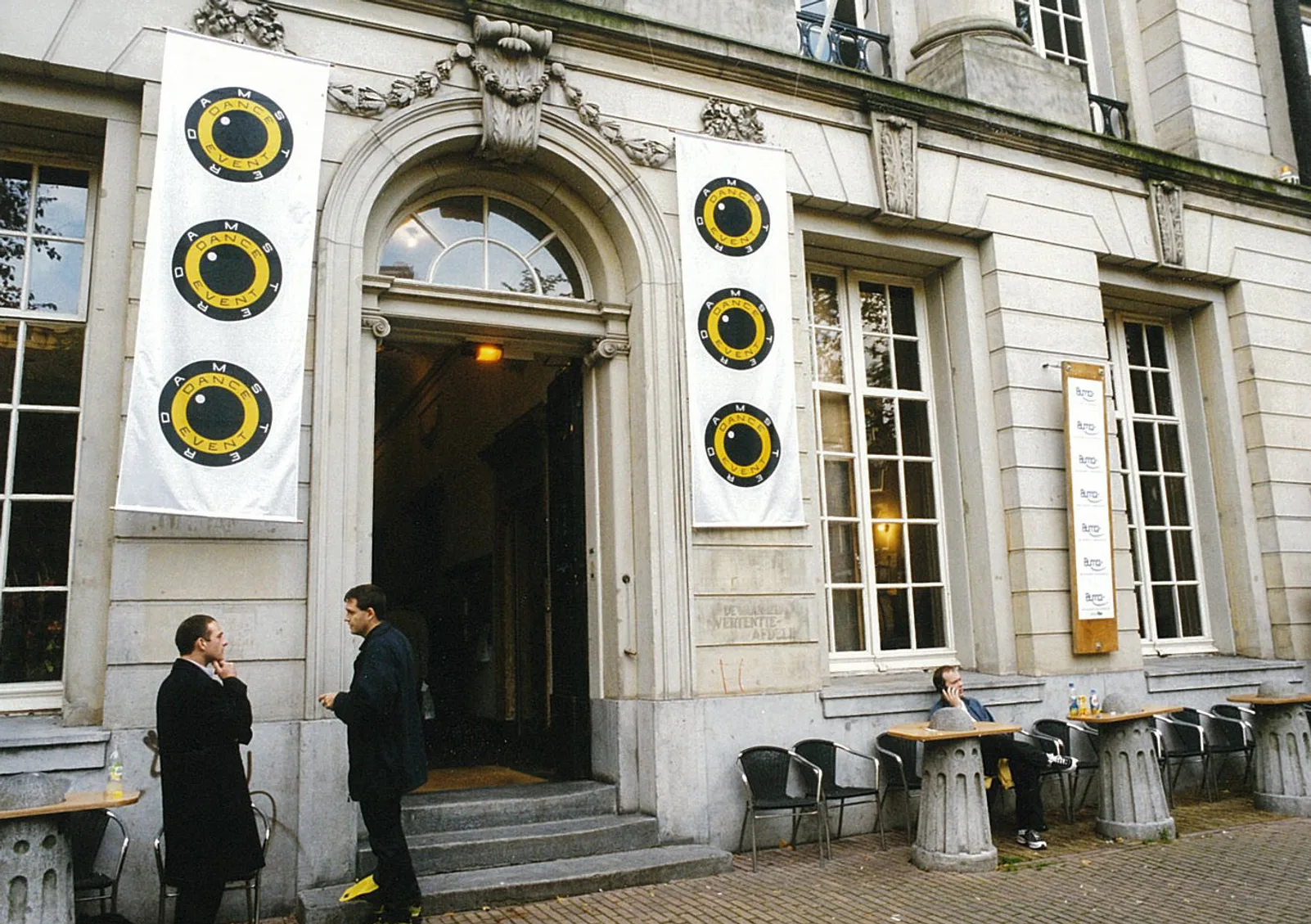
The first ADE was staged at De Balie with a total budget of approximately 60,000 Dutch guilders—the equivalent of roughly €28,000 today. The venue’s café and bar remain on Leidseplein in central Amsterdam, but De Balie is also remembered for helping establish one of ADE’s most enduring traditions: the informal meetings held outside its main entrance.
That tradition began largely by accident.
Mobile network reception inside the building was poor, while De Balie’s thick walls made getting a signal even more difficult. Delegates carrying the brick-sized mobile phones of the era were forced to step outside whenever they needed to make a call.
The small group standing outside on their phones soon attracted other attendees looking to network. Before long, the entrance had become an informal meeting point filled with conversations, introductions and spontaneous business discussions.
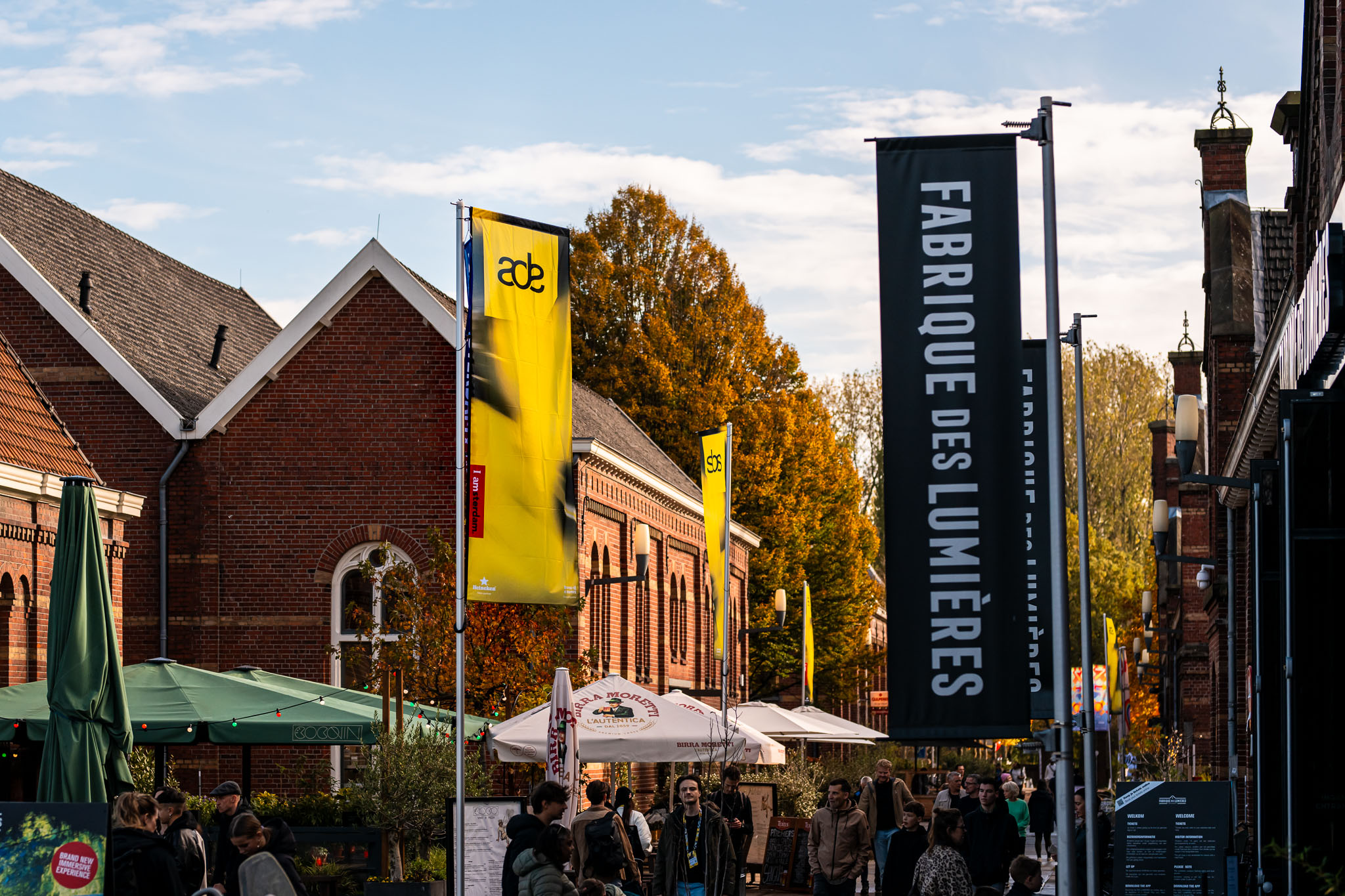
The habit continues today. During ADE, the section of Keizersgracht outside Felix Meritis is closed to traffic, allowing ADE Pro delegates to gather, network and hold meetings in the street without having to watch for passing cars.
It is a small reminder that some of ADE’s most valuable moments have never happened on a stage. They have taken place in hallways, hotel lobbies, cafés and on the pavement outside its venues.
Building a multi-genre church
In its early years, ADE’s musical identity was closely connected to house music, with artists such as DJ Sneak and Jesse Saunders helping define the event’s sound.
Gradually, however, ADE began welcoming a much broader spectrum of electronic music. By the mid-2000s, it was already developing into the expansive, multi-genre institution it is today—a kind of electronic music cathedral with space for nearly every sound, community and corner of club culture.
Anna Knaup, founder of Anna Agency, took over the leadership of ADE from Maria Jimenez in 1997. One of her first priorities was finding a venue capable of accommodating the event’s steadily growing audience.
After moving to De Rode Hoed in 1997, ADE relocated to Felix Meritis the following year.
“When I took over from Maria in 1997, the priority was to find a new venue,” Knaup recalled. “We moved to Felix Meritis in 1998, which wasn’t ideal, but was considerably better than De Rode Hoed and able to cope with the growing number of delegates we were seeing year on year.”
The team was also determined to strengthen ADE’s nighttime programming by incorporating more genres and subgenres.
“That was the start of the all-embracing ADE Festival that we see today,” Knaup added.
The festival initially concentrated its activity around Leidseplein and Rembrandtplein. Today, thousands of artists perform throughout Amsterdam, transforming the entire city into a global destination for electronic music.
As ADE expanded, a generation of Dutch artists was also preparing to dominate the international dance music landscape.
Armin van Buuren, Ferry Corsten, Marco V, Misja Helsloot, Sander van Doorn and Tiësto were among the local talents beginning to attract wider attention. Their rise marked the beginning of a remarkable period in which Dutch DJs occupied many of the highest positions in DJ Mag’s Top 100 DJs poll.
The trance era helped establish the Netherlands as an international electronic music powerhouse, but ADE continued expanding far beyond a single genre. Over the years, its festival program welcomed virtually every major style and countless globally recognized acts.
Its physical footprint grew at a similar pace. The number of participating spaces doubled and tripled over time, reaching approximately 300 venues in 2025.
Finding—and returning to—an iconic home
Following ADE’s early editions at De Balie and De Rode Hoed, Felix Meritis became its defining home in 1998. The nearby Dylan Amsterdam was later added as an additional venue, helping the conference accommodate its growing program and audience.
ADE remained at Felix Meritis until 2017, when the historic 17th-century building closed for extensive renovations and a much-needed infrastructure upgrade.
The conference then spent three years at the chandelier-lit DeLaMar Theater near the American Hotel. Two online-only editions followed during the COVID-19 pandemic, a period that also brought ADE’s first joint directorship under current director Jan-Willem van de Ven and former Spinnin’ Records marketing executive Meindert Kennis.
Those digital editions were broadcast from the newly renovated Felix Meritis, offering audiences a glimpse of ADE’s restored home even when the international community could not gather there in person.
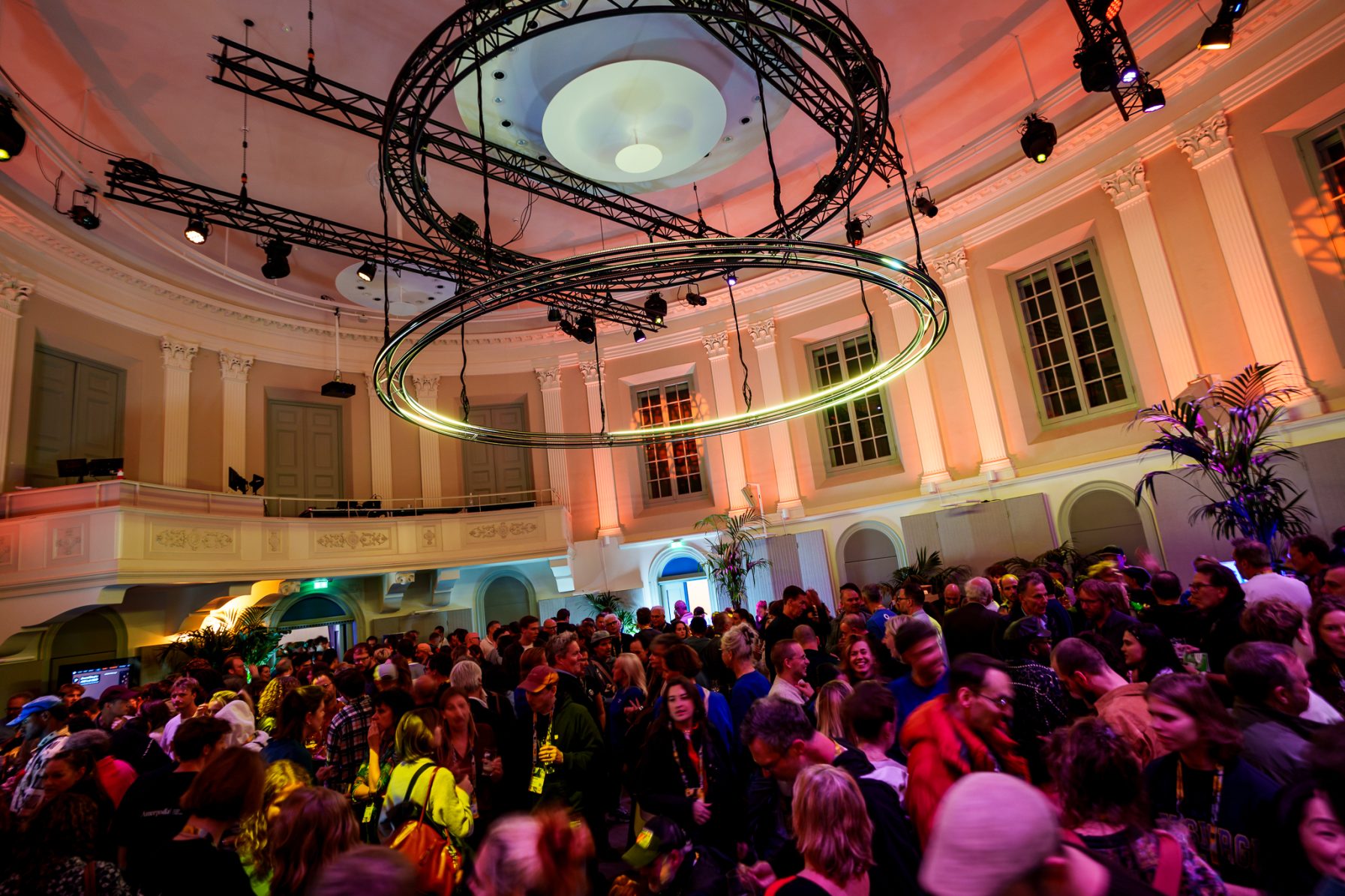
In 2022, ADE finally returned to the building. Today, the Andaz and Rosewood hotels also serve as satellite locations for its expanding professional program.
Thirty years of people, passion and possibility
ADE’s development from a 60,000-guilder conference into a globally recognized institution was never the work of one person. Its legacy was built by hundreds of dedicated individuals who contributed their ideas, energy and expertise over three decades.
Its success required fearlessness, passion and determination—as well as the difficult-to-define magic of being in the right place at the right time.
Through it all, ADE has retained the same essential spirit Smith witnessed in its earliest days. It remains a place where established figures are celebrated, emerging talent is encouraged and the international electronic music community comes together to exchange ideas.
The phones are smaller now, the venues are larger and the music represents more genres than ADE’s founders could likely have imagined. But outside Felix Meritis, people are still gathering in the street, starting conversations and forming connections.
Thirty years later, that may be the clearest example of what Amsterdam Dance Event has always been about.