
A great night out can introduce someone to their favorite artist, give a new DJ their first audience, or create a community that lasts for decades. Those experiences help define a city, yet their value can be difficult to capture in budgets and policy decisions.
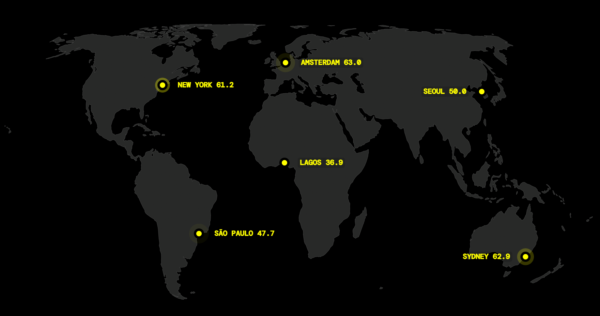
The Nighttime Culture Index (NCI) aims to make that value visible. Developed by nighttime research and advocacy agency VibeLab in partnership with Amsterdam Dance Event, the initiative examines the cultural vitality of nightlife, giving artists, promoters, venues and policymakers evidence to help support its future. Its first edition covers Amsterdam, Lagos, New York, São Paulo, Seoul and Sydney.
The project looks at six connected areas: creative ecology, space and infrastructure, diversity and representation, community and belonging, policy and civic health, and sustainability and environment. Together, they explore the conditions that allow culture to develop—from opportunities for experimentation to the accessibility of venues and the support available through local government.
For electronic music, these questions reach directly into the future of the scene. Consider an emerging DJ trying to organize a first event: finding an affordable room, attracting an audience and helping people get home all influence whether that night can grow into something lasting.
The research brings substantial detail to those conversations. Across its six cities, the team analyzed 12,664 event lineups, assessed 3,073 venues and researched 29,727 non-music cultural events. It also gathered 767 survey responses, alongside contributions from 67 focus group participants and 14 experts. That combination connects measurable activity with the experiences of people who participate in nighttime culture.
Affordability produces one of the clearest examples of how differently nightlife is experienced around the world. According to the Index, a club ticket represents approximately 1.13 hours of minimum-wage work in Sydney, compared with 24.76 hours in Lagos. The difference raises a fundamental question: who can afford to participate in the culture being created around them?
Representation presents another challenge. Female and gender-diverse artists account for approximately 27% to 32% of bookings across the cities studied. The research also identifies grassroots, alternative and queer scenes as important drivers of inclusive programming and audience care, while warning that rising costs make those practices vulnerable. Informal, DIY and public spaces also provide essential room for emerging talent and experimentation.
The findings require context. The NCI explicitly avoids ranking cities, recognizing that different places develop different nighttime cultures. Its survey and focus groups reflect their participants rather than entire city populations, and the availability of data varies between locations. The scores are intended to inform discussion and track change over time.
That makes the Index particularly useful as a starting point for action. Its evidence can help communities explain what they need and give decision-makers a clearer understanding of what their choices affect. For an industry built on discovery, shared spaces and creative risk, protecting those conditions is an investment in the music still to come.