

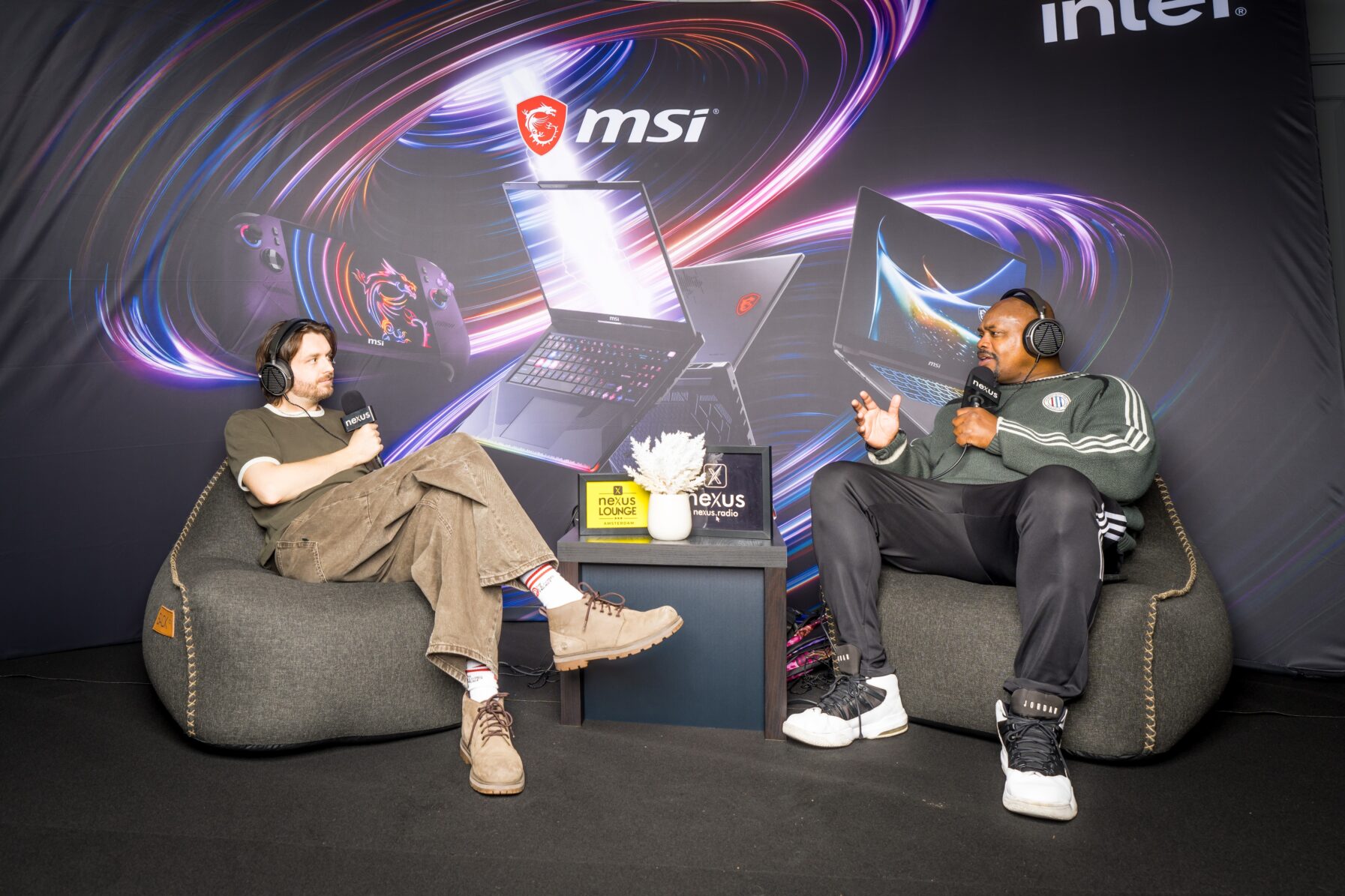
Roland Clark has spent more than three decades giving dance music a voice, but the stories behind that voice often begin somewhere surprisingly ordinary. An overheard conversation, a passing observation, or a quiet moment at home can become the starting point for something that eventually reaches a crowded dance floor. Sitting down with Frank at Nexus Lounge Amsterdam, Roland Clark discussed how those ideas develop, why ownership matters, and what keeps him curious after so many years in music.
With Amsterdam Dance Event celebrating its 30th anniversary, the conversation naturally turned to the connections that bring artists back. Roland Clark’s career was already underway before his experiences at ADE, yet he appreciates the gathering as a celebration of the relationships running through electronic music. Producers, vocalists, and DJs who spend much of the year scattered across different countries suddenly have an opportunity to reconnect. For someone whose work has traveled through so many collaborations, that personal exchange remains meaningful.
Away from those industry gatherings, Roland Clark describes a working life with considerably less ceremony. His account of making music at home in his underwear brings some welcome humor to the conversation, while revealing how comfortable he is with the everyday reality of creating. Inspiration does not require an elaborate setting. Sometimes it requires paying attention to what people say when they are simply going about their lives.
That attention helps Roland Clark avoid repeating himself. Rather than returning to the same subjects because they have worked before, he looks for another perspective or a different emotional entry point. Everyday conversations provide a seemingly endless supply of both. The challenge is turning something familiar into a lyric or idea that listeners can recognize in their own experiences, while still giving them a reason to hear it differently.
His use of aliases offers another way to keep the process open. Projects such as Jesus Jackson and Black Ghetto allow Roland Clark to explore sounds without carrying every expectation attached to his established name. Each identity creates room for a different approach, making it easier to follow an idea wherever it leads. For an artist with a long history in house music, that freedom can be especially valuable.
Black Ghetto gives Roland Clark a space to explore techno and develop another side of his musical vocabulary. The appeal lies in being able to enter a project with a fresh perspective. Instead of asking whether a track fits what listeners already know, he can consider what serves the music in front of him. His enthusiasm for that process suggests that experience has strengthened his appetite for discovery.
Creative freedom also has a practical side, and the conversation becomes particularly pointed when Roland Clark discusses ownership. With his work reaching new audiences through other artists’ recordings and reworkings, he understands the value of having a say in how music is used. For younger producers, his advice is to think beyond the immediate excitement of getting a record released.
“You own it. They have to come to you for use,” Roland Clark explains.
He encourages artists to retain their masters whenever possible and to consider making a handful of tracks each year that remain under their ownership. It is an approach that treats a catalog as something worth building patiently. Alongside the creative satisfaction of finishing a record, there is value in preserving control over its future and the opportunities it may generate.
The demands surrounding those releases have changed considerably during Roland Clark’s career. Social media now asks musicians to become regular content creators, adding another responsibility to an already demanding profession. He recognizes the energy younger artists bring to that work, while questioning how reliably online attention translates into people supporting the music. A large following can create visibility, but the relationship with listeners still needs substance.
Working with younger talent, including HoneyLuv, keeps that exchange between generations active. Their drive offers fresh energy, while Roland Clark brings the perspective of someone who has experienced several chapters of the industry. Continuing to release music through Delete International Records, he remains involved in the daily work of creating and discovering.
That curiosity gives the conversation its momentum. Roland Clark has plenty of history to discuss, yet he sounds equally interested in the next idea, identity, or collaboration. Listen to the full interview with Frank below for more on Roland Clark’s creative process, musical ownership, and continuing journey through dance music.