In a city where nightlife and architecture often collide, one Berlin couple has taken that relationship to its most intimate extreme, by turning their home into a living extension of Berghain.
Designed by Studio Karhard, the very architects behind the legendary techno institution, the 1,022-square-foot apartment in Kreuzberg reimagines Berghain’s raw, industrial aesthetic as a deeply personal living space. The result is a rare crossover between Berlin’s underground culture and residential design—where the boundary between club and home dissolves.
Berghain itself has long been mythologized for its imposing architecture, cavernous interiors, and near-mythical door policy enforced by Sven Marquardt. But this project flips that exclusivity on its head: instead of waiting in line, the owners wake up inside the atmosphere.
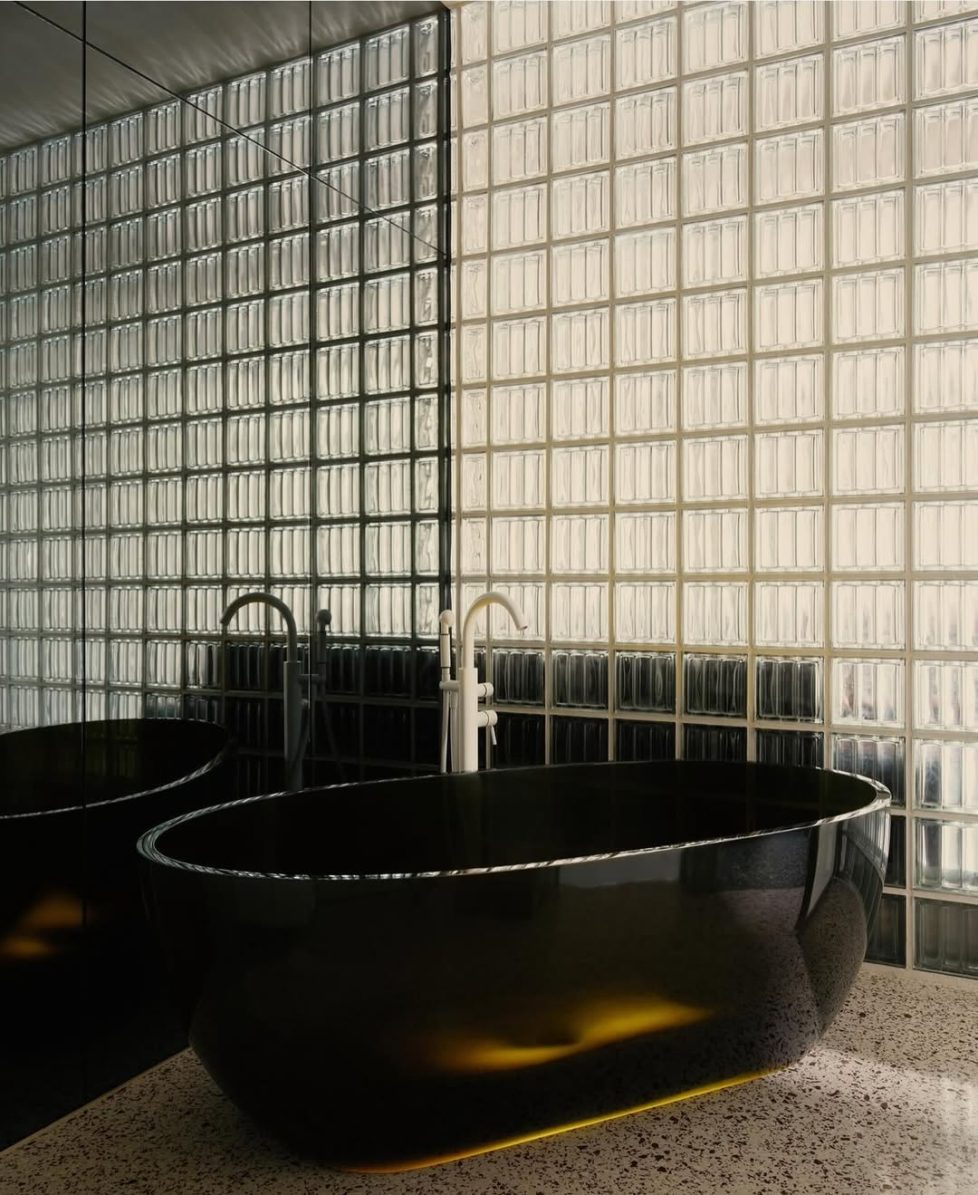
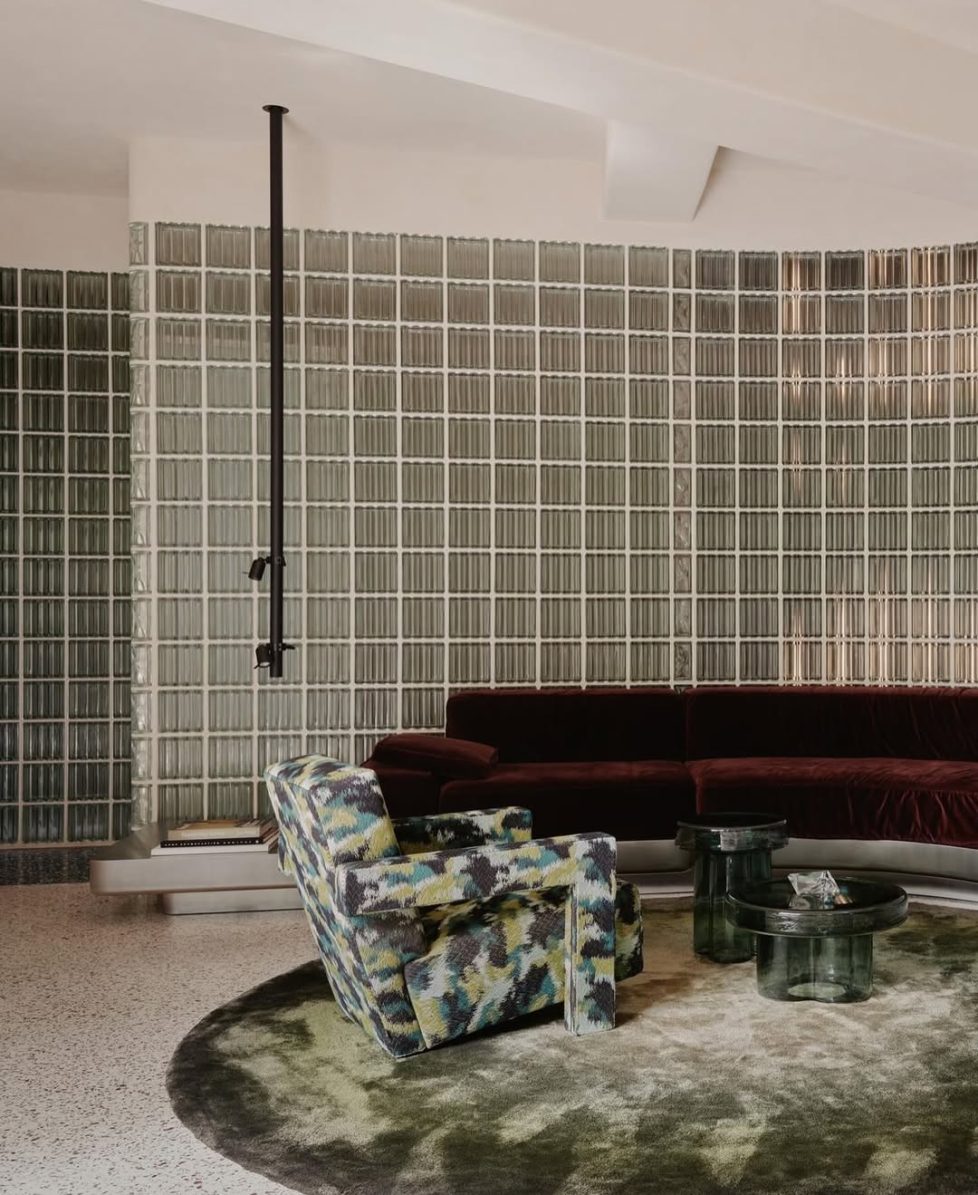
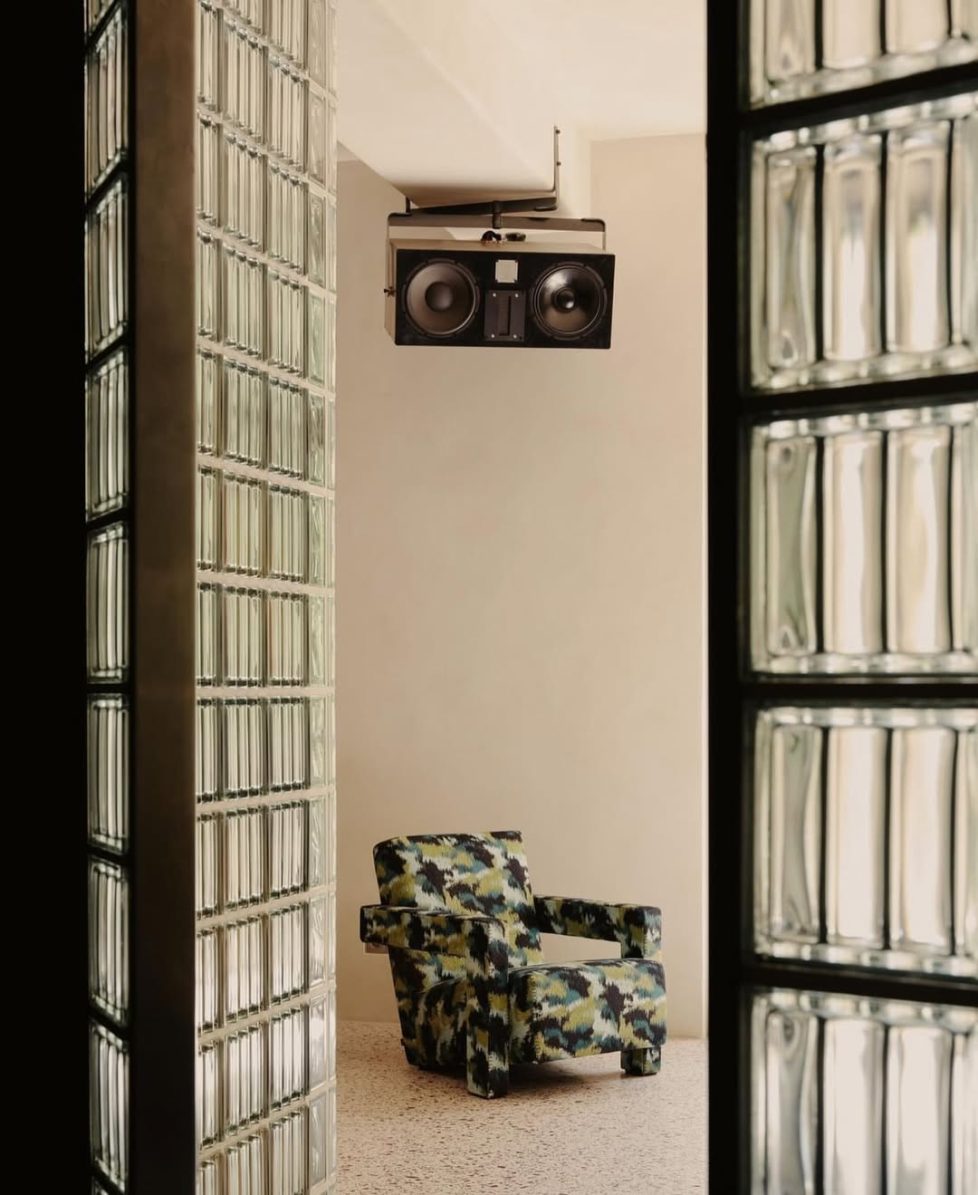
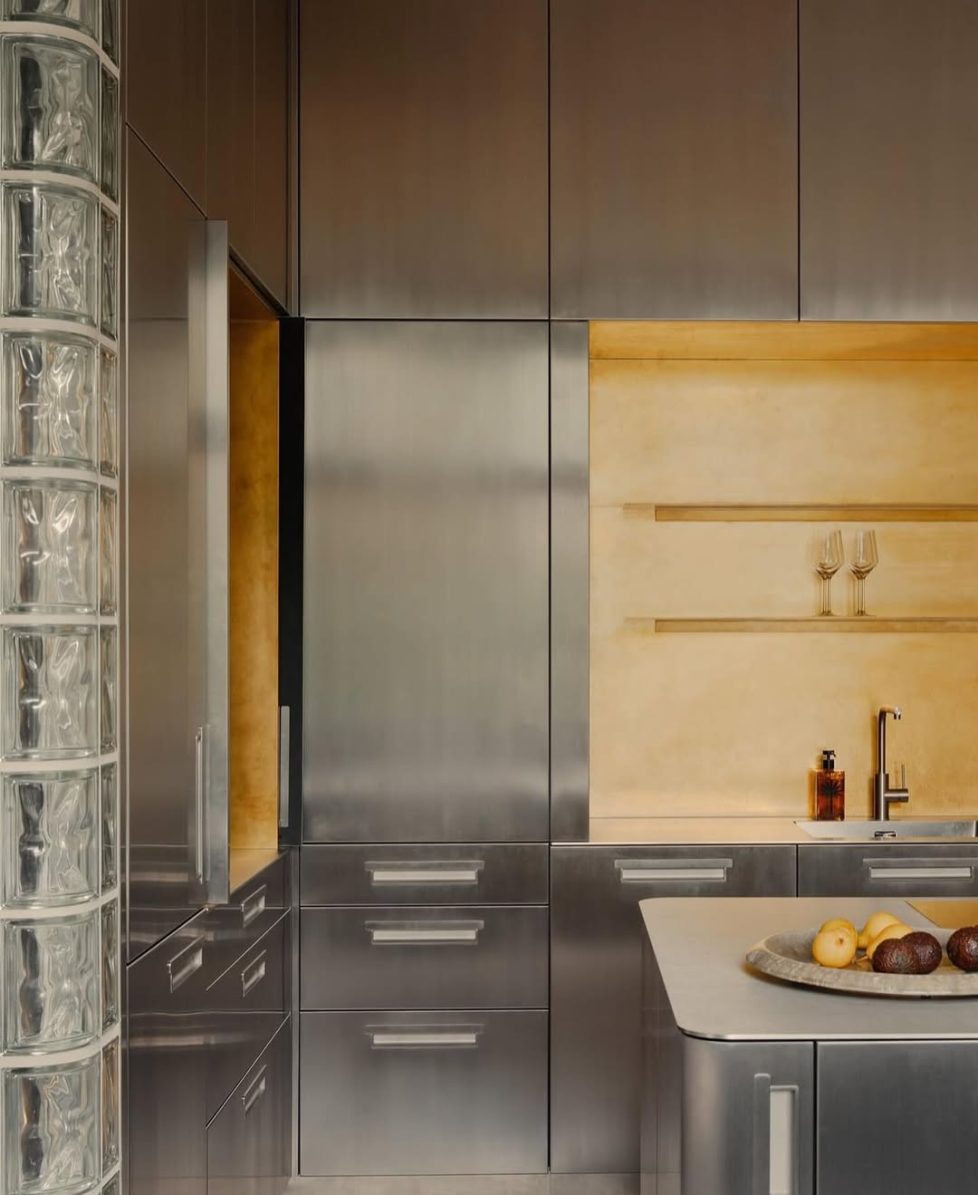
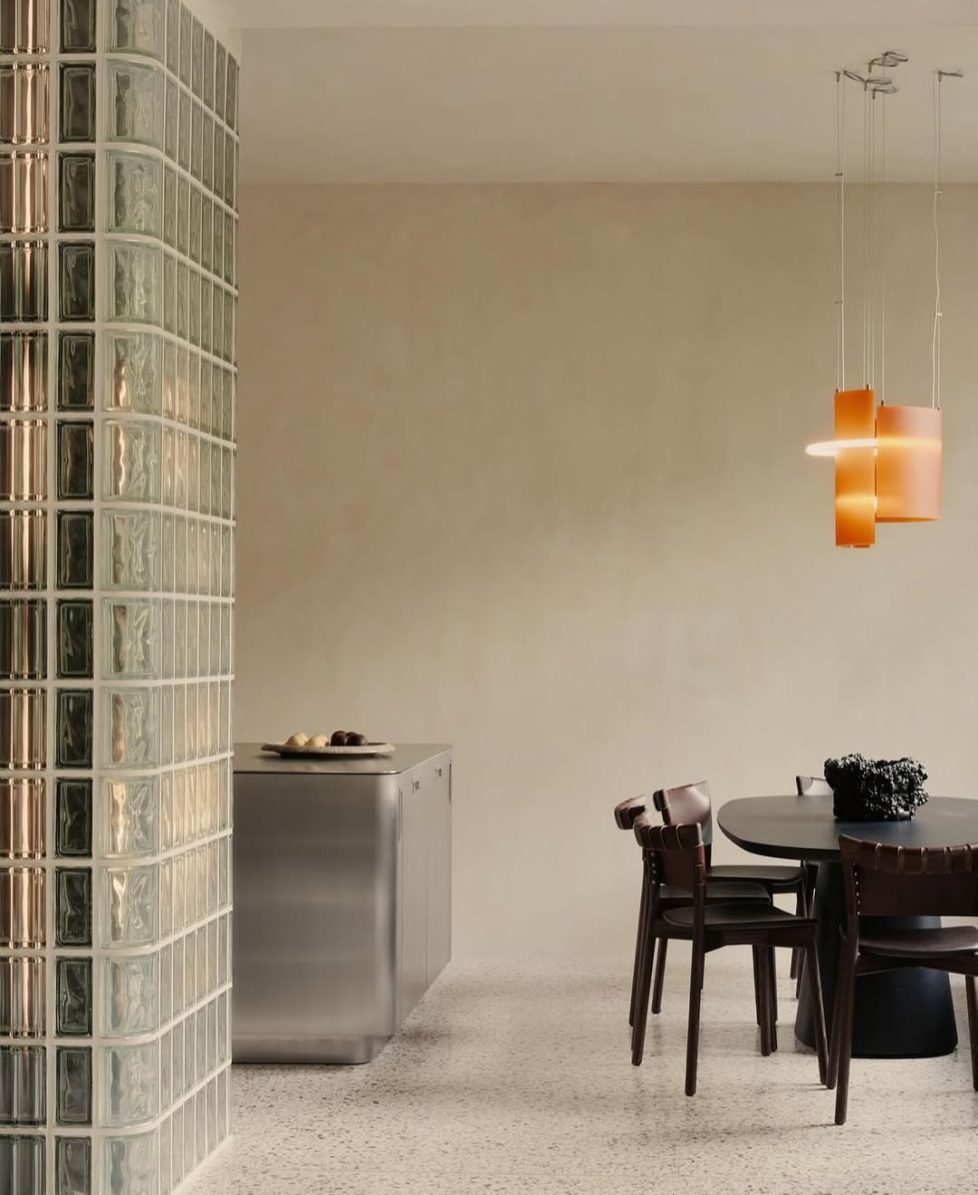
At the heart of the apartment is a curved glass-block wall, softly illuminated from within. The effect is what Studio Karhard founder Thomas Karsten describes as “almost cinematic”—a glowing divider that shapes the space while maintaining an ambient, dreamlike continuity. It’s a subtle nod to Berghain’s ability to manipulate light and perception without overwhelming the senses.
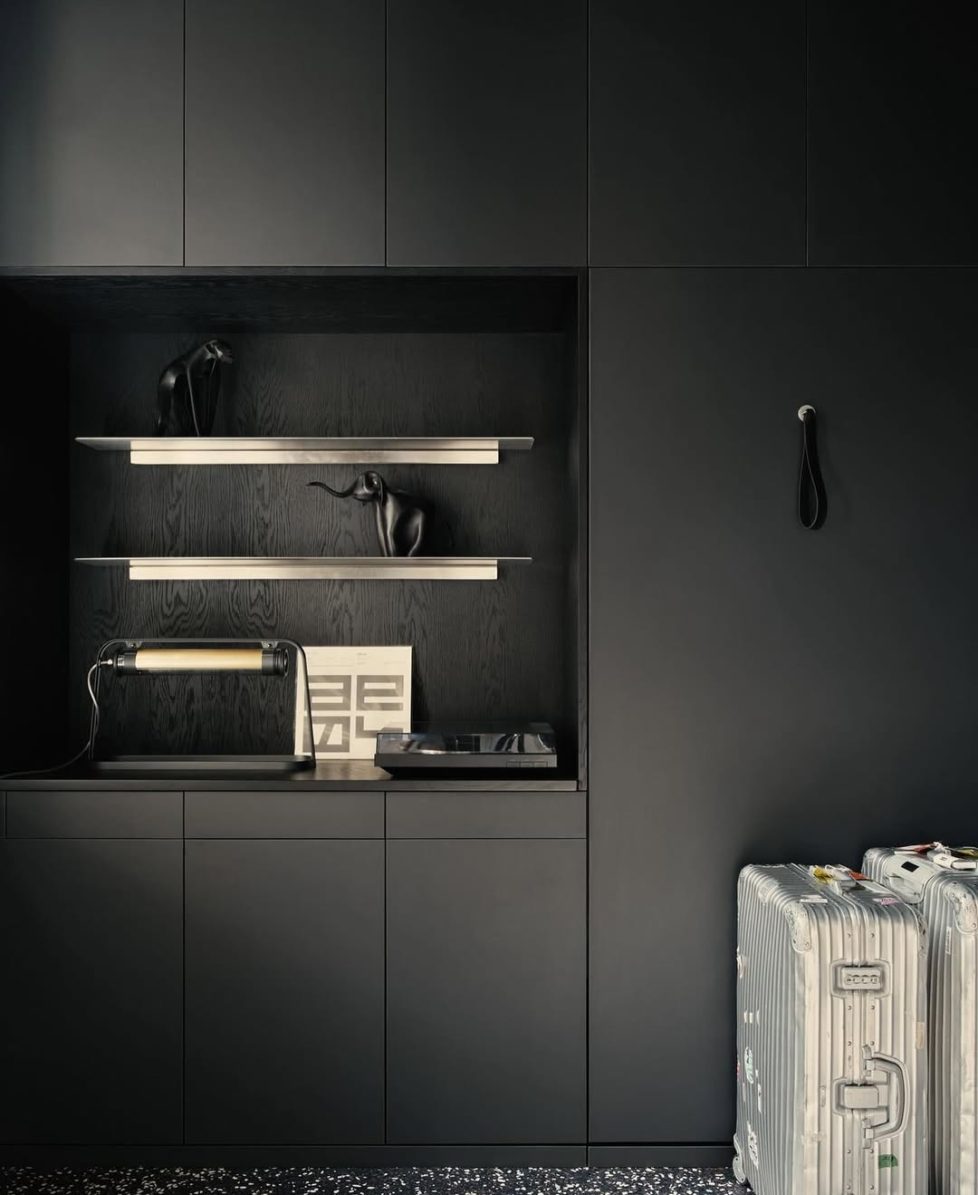
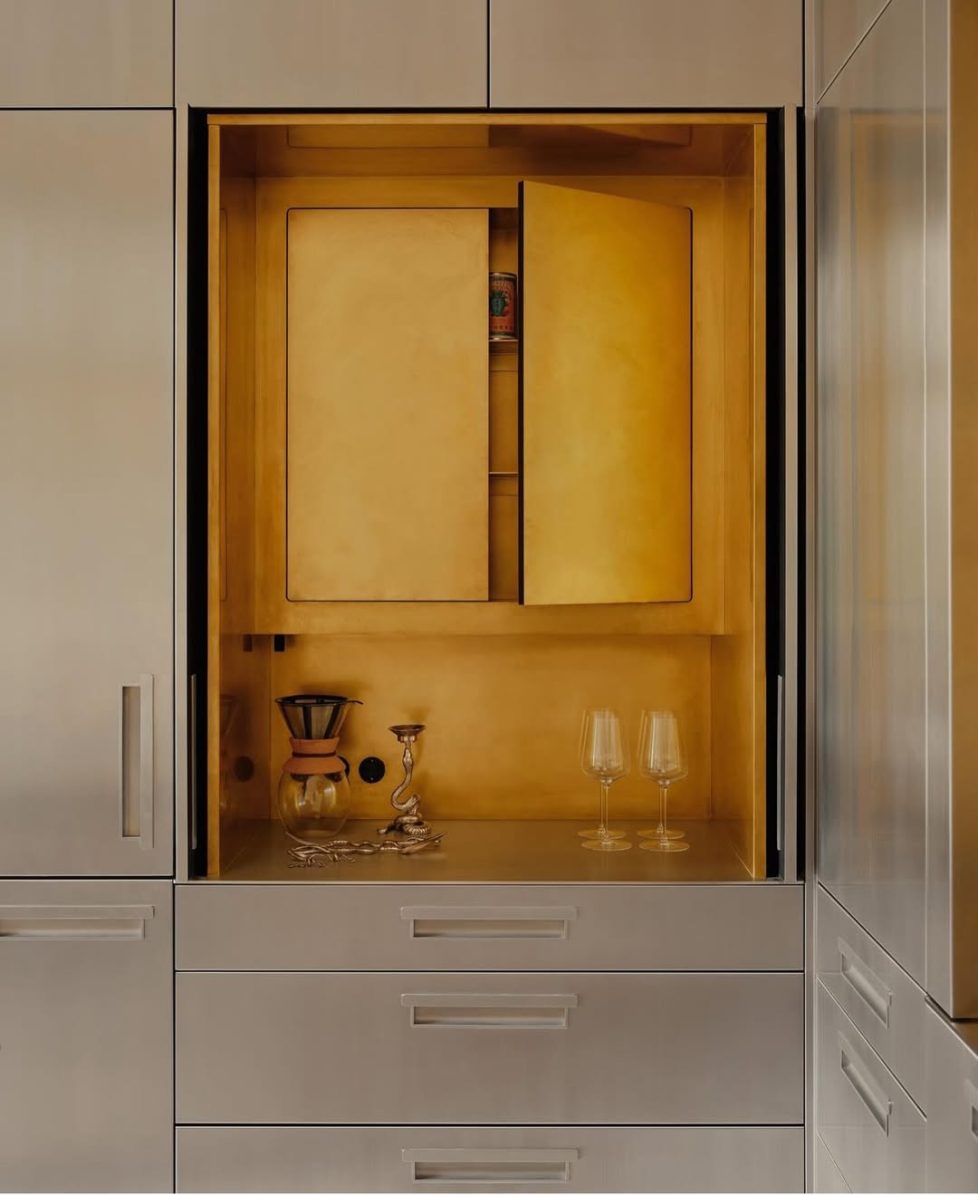
The material palette stays true to the club’s DNA. Terrazzo floors stretch across the apartment, complemented by untreated brass fixtures and structured plaster walls. These elements echo the power-plant origins of Berghain itself, grounding the space in an industrial honesty that feels both stark and intentional.
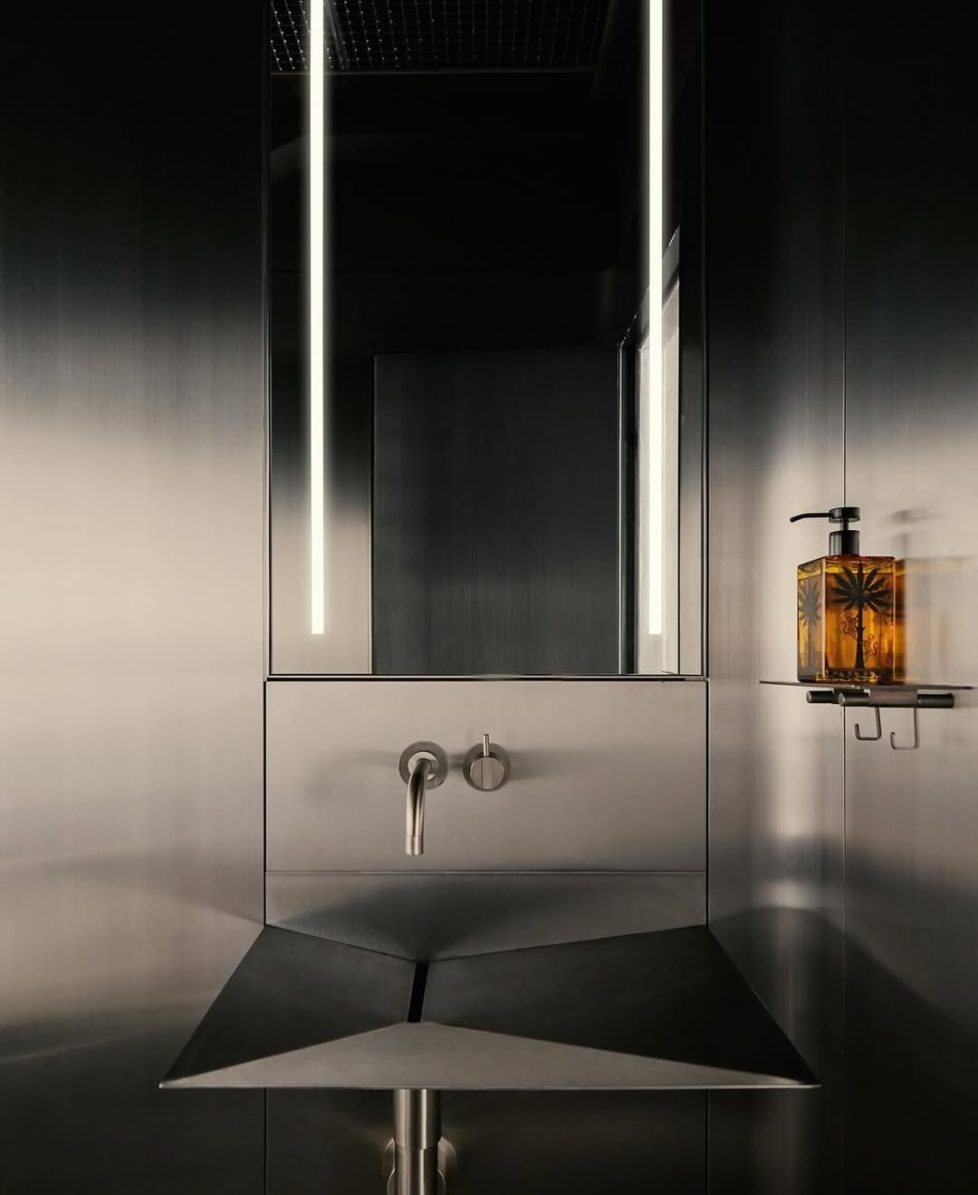
Yet the apartment isn’t a replica—it’s an evolution. One of the most striking areas is the guest bathroom, envisioned as a “mystical” environment. A metal grid ceiling, paired with adjustable lighting, transforms the room into a theatrical experience. At one point, the idea of adding a fog machine was even considered—a playful reminder of just how closely the design dances with nightlife culture.
Translating Berghain’s immersive, time-warping energy into a livable home presented a unique challenge. The club is known for making hours disappear on the dance floor, a sensation that doesn’t easily translate into everyday domestic life. Studio Karhard’s solution was to balance atmosphere with comfort—preserving the emotional intensity while ensuring the space remains functional and warm.
That balance was achieved through an unusually collaborative process. “The owners were involved in every detail; it was like a game of ping-pong,” Karsten explained. “They gave us freedom, and we worked closely with craftsmen to develop tailor-made solutions.”
The result is more than just a design experiment—it’s a statement about Berlin itself. In a city where music, art, and architecture are inseparable, this apartment embodies the idea that club culture isn’t confined to the night. It can shape how people live, move, and experience space long after the music stops.