
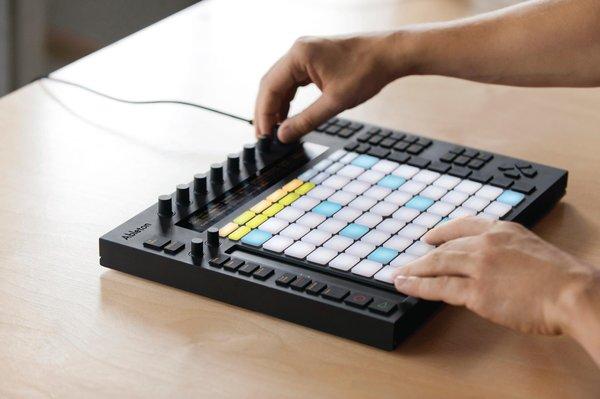
It’s hard to imagine modern music production without Ableton Push. The controller has become a staple in studios and live performances around the world, helping producers move away from the mouse and keyboard and interact with music in a more hands-on way. But before Push became one of the most recognizable pieces of music technology on the market, it was built out of LEGO.
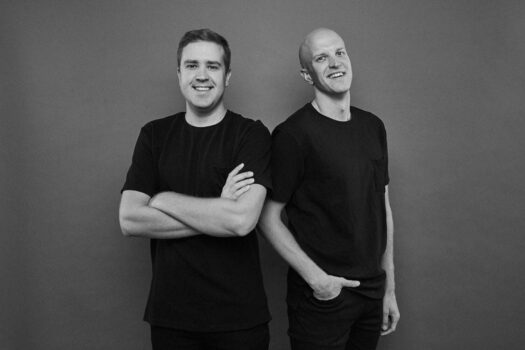
Jesse Terry, Head of Hardware at Ableton and one of the creators of Push, recently shared the story behind the device’s development in a video from the Powerhouse Museum in Australia. Among the most interesting revelations was that many of the early prototypes were constructed using LEGO bricks.
According to Terry, the design process involved countless experiments as the team tried to determine the ideal layout for the controller. Rather than creating expensive prototypes for every new idea, LEGO allowed them to quickly move buttons around and test different configurations.
"There were many, many phases of moving buttons around, trying to figure out what was the right ergonomics for it," Terry explained.
The simplicity of LEGO turned out to be one of its greatest strengths. Because nothing felt permanent, the team was free to experiment without worrying about getting it wrong. Terry described the process as playful, allowing ideas to evolve naturally until they landed on the layout that would eventually become Push.
"The LEGOs let me adjust a lot of the extra buttons in a very fluid way," he said.
That focus on physical interaction was always central to the project. Terry believes there’s something special about making music with your hands that simply can’t be replicated with a computer mouse.
"The tactility is important because you get nuances of rhythm and pitch with your fingers that you can't get using a mouse or a computer keyboard," he explained. "There's these variations that are off the grid that I think is what makes human music have soul."
When Ableton introduced the first Push in 2013, the goal was to create an instrument that could work for both beginners and experienced producers alike. Rather than simply acting as a controller for software, Push was designed to feel like a real instrument—something musicians could learn, practice, and perform with.
The concept clearly resonated. Push quickly became a favorite among electronic music producers, performers, and composers who wanted a more intuitive way to create music inside Ableton Live.
The hardware continued to evolve over the years. Push 2 arrived in 2015 with a redesigned display and improved workflow, while Push 3, released in 2023, represented the biggest leap yet. Equipped with its own processor, storage, and battery, Push 3 became the first version capable of operating completely on its own without being connected to a computer.
Looking back, it’s fascinating to think that one of the most influential music production tools of the last decade began as a collection of colorful plastic bricks sitting on a designer’s desk. It’s a reminder that innovation doesn’t always start with cutting-edge technology. Sometimes it starts with a simple idea, a willingness to experiment, and a box of LEGO.
You can check out the prototype models and hear more about the development process in the Powerhouse Museum’s video interview with Terry.